
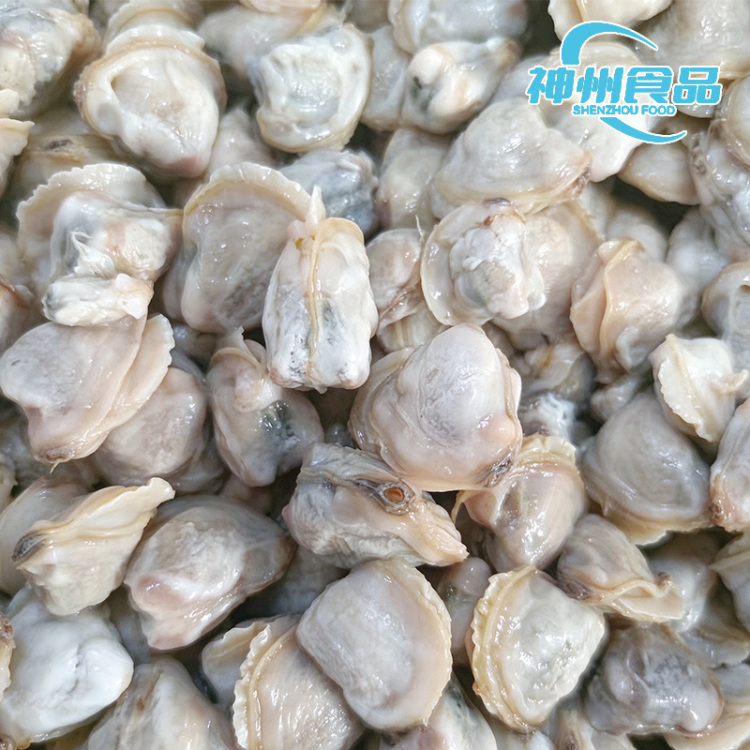
A river clam is a small freshwater bivalve — commercially, almost always Corbicula fluminea, the Asiatic clam — harvested from lakes and rivers instead of the sea, and it behaves nothing like the saltwater clams most importers have on their spec sheets. It is roughly the size of a fingernail, sweet rather than briny, and sold overwhelmingly as shucked meat rather than in-shell. If you are building a menu or a frozen meal line, this is the cheapest entry into the category — and the first question buyers ask is what are freshwater river clams used for in cooking. Below is the species profile, the flavor logic, and the export specifications a procurement team actually needs. Shenzhou has processed these clams on the shore of Hongze Lake since 2011, so everything here comes from a running production line rather than a reference book.
1. What Are Freshwater River Clams Used For in Cooking?
They are used wherever small, sweet, firm meat adds body and umami instead of shell presentation: soups, congee, hot pot, stir-fries, pickled preparations, and as an industrial ingredient in canned clam products, frozen ready meals, and clam-based seasonings. The meat is too small to plate in the shell, so the entire commercial logic of this species runs through the kitchen rather than the display counter.
The dish map looks like this:
- Chinese cooking — stir-fried with basil, garlic, and chili; clam and tofu soup; clam meat with egg; salted or dried clam as a seasoning base in coastal and lake provinces.
- Japanese cooking — shijimi miso soup, the everyday breakfast soup where the clam supplies the dashi-like sweetness.
- Korean cooking — jaecheop-guk, the clear clam soup traditionally served as a hangover remedy.
- Southeast Asian cooking — added to sour soups, omelettes, and chili pastes for background sweetness.
- Western kitchens — a cost substitute in white wine and garlic sauces, chowders, and stuffings where the clam is chopped or blended rather than featured whole.
For food manufacturers the answer to what are freshwater river clams used for in cooking extends past restaurant plates: the meat goes into retort-pouch soups, dumpling and wonton fillings, instant noodle seasoning, clam extract and juice concentrate, and pet food palatants. All of these share one requirement — clean, sand-free, consistently graded meat — which is why most buyers purchase Quick-frozen clam meat that is already purged, boiled, shell-separated, and IQF-frozen, rather than buying live product and building a shucking operation.
✅ Bottom line: river clams are an ingredient, not a centerpiece — sell them into broths, fillings, and sauces where sweetness and cost matter more than shell appeal.
2. River Clam vs Manila Clam Flavor and Size Comparison
A river clam is roughly one-quarter the size of a Manila clam, tastes sweeter and less salty, and costs 30–50% less per kilo — so the river clam vs manila clam flavor and size comparison is really a comparison between an ingredient and a plate. Buyers who swap one for the other without adjusting the recipe usually end up with either an overpowered dish or a portion that looks thin.
|
Attribute |
River Clam (Corbicula fluminea) |
Manila Clam (Venerupis philippinarum) |
|
Water type |
Freshwater lake / river |
Saltwater, farmed intertidally |
|
Size grading |
1,000–1,500 pcs/kg (meat) |
200–700 pcs/kg |
|
Flavor |
Sweet, mild, faint earthy note |
Briny, saline, mineral |
|
Texture after cooking |
Firm, springy, holds shape |
Plump, tender, softens quickly |
|
Typical sale form |
Boiled IQF meat, vacuum packed |
Live in shell, or frozen whole |
|
Bulk price band (FOB China) |
~$1.5–3/kg |
~$2.5–5/kg |
|
Marine biotoxin risk |
None (no marine algae cycle) |
Harvest zones can close seasonally |
|
Best applications |
Soups, sauces, fillings, canning |
Vongole, paella, steaming, raw bars |
Two consequences follow. River clam meat disappears inside a dish built around whole shellfish, so it will not carry a vongole presentation — but it beats Manila clam in anything cooked long or chopped fine, because firm texture resists mush in a retort pouch or a simmering broth. Manila supply also carries marine biotoxin closure risk that freshwater lake sourcing does not, a point wholesale buyers in Japan and Korea weigh heavily. Where shell presentation still matters, Live river clams ship in insulated boxes with high survival rates; where it does not, the meat format wins on landed cost.
✅ Bottom line: match the species to the cooking method — river clam for processed and simmered applications, Manila clam where the shell is the selling point.
3. Chinese River Clam Meat Export Specifications
Chinese river clam meat export specifications are built around four variables: grading (pieces per kilo), processing form (boiled IQF meat, cooked whole-shell, or live), net weight versus glazing, and packaging configuration. Get these four onto the quotation and the price comparison becomes meaningful.
- Grading — commercial freshwater meat is sorted at roughly 1,000–1,500, 1,500–2,000, and 2,000+ pcs/kg. Smaller grades suit sauces and fillings; larger grades hold up in stir-fry and canned products.
- Processing form — boiled and shell-separated IQF meat is the volume product; cooked whole-shell product serves retail and foodservice; live product serves wet markets and specialty retail.
- Net weight vs glazing — export cartons are usually quoted either as net weight (drained) or gross weight including a 10–20% ice glaze. A 10kg carton with 20% glaze delivers 8kg of meat. Always confirm which figure the price refers to.
- Packaging — 500g and 1kg vacuum bags for retail and foodservice, 10kg master cartons for industrial buyers, with OEM private-label artwork supported.
- Shelf life and storage — 24 months at -18°C for frozen product; live shipments move under temperature-controlled air freight with tight transit windows.
Standard minimum order is one 20ft container, which holds roughly 8–10 tons of frozen product, and every shipment leaves with the full export documentation set — health certificate, certificate of origin, and food safety inspection records. Huai'an Shenzhou Food Technology Co., Ltd. runs three dedicated lines with 3,000 tons of annual output and ships to importers in Japan, South Korea, and the United States, which means grading standards for those three markets are already dialled in rather than negotiated from scratch. Industrial buyers typically start with Frozen river clams in bulk cartons, run a sample against their existing recipe, then convert to a private-label pack once volumes stabilise.
✅ Bottom line: agree grading, form, net weight, and packaging in writing before comparing FOB prices — otherwise you are quoting four different products.
FAQ
Q: Is a river clam the same as a freshwater clam? A: In commercial trade, yes. "River clam," "freshwater clam," and "Asiatic clam" all point to Corbicula fluminea. The species is farmed by specialist suppliers in lake systems across eastern China, and is distinct from saltwater Manila, short-neck, and Venus clams.
Q: Can river clam meat be used in Italian or Mediterranean dishes? A: It can, with one adjustment: reduce the salt in the recipe, because the meat carries far less natural salinity than a Manila clam. It works best chopped into white wine and garlic sauces, chowders, and stuffings rather than presented whole in a vongole.
Q: What is the minimum order and lead time for a first shipment? A: One 20ft container, roughly 8–10 tons of frozen product, with production scheduled 20–25 days after order confirmation and packaging artwork approval. Shenzhou sends a 1kg sample and a full spec sheet before any container commitment, so your R&D team can test the grade first.
Request the River Clam Species & Spec Sheet
Shenzhou will send a complete buyer package within 24 hours: species documentation, grading chart with piece counts per kilo, glazing and net-weight options, current FOB price list, and a sample arrangement for your test kitchen. If you are evaluating river clam meat as a cost-reduction move or building a new canned or frozen product line, our factory-direct team will map the right grade to your application. Contact Huai'an Shenzhou Food Technology Co., Ltd. and put lake-direct pricing into your next comparison.
Email: [email protected] Phone number: +86 13905231254
Website:www.shenzhoulife.com