1. Is Freshwater Clam Meat Safe to Eat from China?
Yes — when it is fully cooked and produced in an export-registered facility under inspection, freshwater clam meat from China is a routine import in Japan, Korea, and the United States; the species is not the hazard. The hazards are the ordinary ones attached to any filter-feeding bivalve, and every one of them has a known control step.
|
Hazard |
Where it originates |
Control step |
|
Bacteria (Vibrio, Salmonella) |
Growing water, warm holding |
Boiling, rapid chilling, cold chain |
|
Viruses (norovirus, hepatitis A) |
Contaminated water, handler hygiene |
Cooking as the kill step, process hygiene |
|
Parasites |
Raw freshwater bivalves |
Thorough cooking; absent from boiled product |
|
Heavy metals |
Lake sediment, upstream discharge |
Harvest-area monitoring, batch testing |
|
Sand, grit, shell fragments |
Inadequate purging and sorting |
Multi-stage depuration, metal detection |
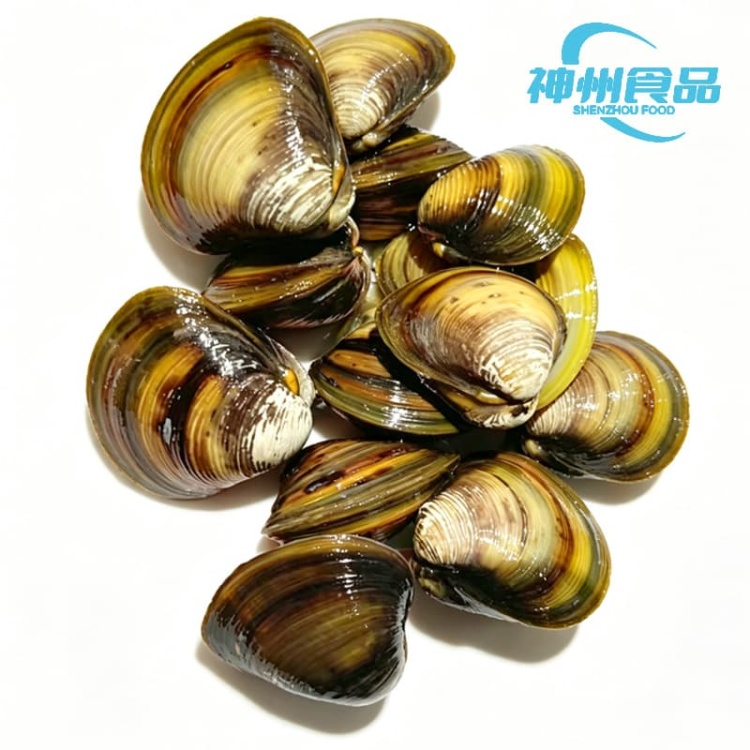
Two clarifications. Marine biotoxins — the paralytic shellfish poisoning closures that shut coastal harvest zones — do not apply the same way to lake-grown clams, because there is no marine algal bloom cycle; freshwater systems carry their own water-quality risks, so harvest-area monitoring replaces biotoxin testing. Second, format changes the risk profile: live product is raw and the kill step happens in your customer's kitchen. That is why Live river clams carry an explicit cook-before-eating requirement, while boiled frozen meat leaves the plant already cooked.
The honest answer to is freshwater clam meat safe to eat from china therefore depends on one question you should ask every supplier: is the product boiled and frozen, or is it raw?
✅ Bottom line: the species is not the risk — raw versus cooked, and registered versus unregistered, are the two variables that matter.
2. Freshwater Clams Must Be Cooked Thoroughly — Safety Rules That Actually Matter
The kill step for bivalves is heat: a core temperature of at least 90°C (194°F) held for several minutes, which in practice means 3–5 minutes in boiling water for shucked meat, and never a raw, ceviche-style, or lightly steamed presentation. If your QA team is drafting freshwater clams must be cooked thoroughly safety rules for a retail pack or a menu, these are the defensible ones.
- No raw service, ever. Freshwater bivalves filter lake water and concentrate whatever is in it; there is no licensed raw market for this species.
- Boil, do not steam briefly. Three to five minutes at a rolling boil from thawed, or five to six from frozen, brings the meat through the kill step without turning it to rubber — the firm texture tolerates it better than a soft saltwater clam.
- Never refreeze after thawing. Thaw under refrigeration at 0–4°C, use within 24 hours, and treat thawed product as an ingredient with a short clock.
- Separate the raw and cooked sides of the kitchen. A boiled product can be recontaminated by a board, a knife, or a hand that touched raw protein — the hazard after the factory gate is cross-contamination, not the clam.
- Label and hot-hold correctly. Retail packs should carry a "cook thoroughly before consumption" statement; foodservice should hot-hold above 60°C and cool leftovers rapidly through the danger zone.
Search for freshwater clams must be cooked thoroughly safety rules and you get the same three lines; almost none mention core temperature, the only number that decides whether the kill step happened. Commercial Quick-frozen clam meat has already passed that step in the plant, so your obligation shifts from cooking to preventing recontamination — a much easier control to audit.
✅ Bottom line: 90°C core for several minutes, no raw service, no refreezing — three rules cover most of the real-world risk.
3. How Factories Make Freshwater Clam Meat Export Safe
Ask how factories make freshwater clam meat export safe and you get one answer: six control points in sequence — harvest-area monitoring, depuration, boiling, rapid chilling and IQF, foreign-matter detection, and cold-chain handover — with a batch code tying every carton back to all of them. Remove any one step and the remaining five cannot compensate.
- Harvest-area monitoring. Lake water is tested for the parameters that matter to a filter feeder before a harvest is released, so contaminated material never enters the plant.
- Depuration and sand removal. Clams are held in clean flow water to purge, then passed through soaking tanks, roller scrubbers, flow-water washing, vibration sorting, and manual inspection. This controls grit as much as pathogens — grit in a finished product is the most common customer complaint in this category.
- Boiling. The kill step, run to a verified core temperature and hold time rather than to a visual cue.
- Rapid chilling and IQF. Fast freezing at -35°C or below locks the cooked product before bacterial regrowth can start; the cold chain then holds -18°C to the destination port.
- Foreign-matter detection. Metal detection and, where specified, X-ray inspection on the packed line, with rejects logged.
- Traceability and documentation. Each batch carries a code linking it to harvest date, line, and inspection record — and the shipment travels with a health certificate, food safety inspection documentation, and the certificates your market requires.
That last point is where first-time buyers get caught. The US requires prior notice and an FSVP importer of record; the EU requires the establishment to be listed for the product category. Ask for the documentation set before negotiating price — no supplier can fix that gap after the container is loaded. Huai'an Shenzhou Food Technology Co., Ltd. ships to Japan, Korea, and the US, and quotes are issued together with the document list for the destination market. Most industrial buyers start with Frozen river clams in bulk cartons, audit one batch's paperwork end to end, and only then scale volume.
✅ Bottom line: safety is a sequence, not a certificate — audit the six steps and the paperwork trail behind one specific batch.
FAQ
Q: Do you test for heavy metals, and can I see the results? A: Heavy-metal testing is part of batch release for markets that require it, and results can be shared once your destination market's limit values are confirmed. Tell us the limits and we will confirm testing scope before quotation.
Q: Can I sell the product as ready-to-eat? A: No. The product is cooked and frozen but is not a ready-to-eat item — it must be reheated or cooked through in the customer's kitchen, and the pack should say so. Selling it as RTE would transfer a liability to you that the process was never designed to carry.
Q: What happens if a batch fails inspection? A: It does not ship. Product is held at the plant pending the inspection result, and the batch code allows the affected lot to be isolated. Ask any supplier to describe this hold procedure in writing — a better indicator of a real quality system than any certificate.
Request the Safety & Documentation Pack
Shenzhou will send a compliance package within 24 hours: process flow with the six control points marked, the document list for your destination market, sample inspection report format, and a 1kg sample for your own laboratory or kitchen trial. If you are a first-time importer needing a defensible supplier file, send your market and product format and we will map the paperwork to it. Contact Huai'an Shenzhou Food Technology Co., Ltd. and start your approval process with documentation instead of assurances.
Phone number: +86 13905231254
Email: [email protected]
Website:www.shenzhoulife.com