
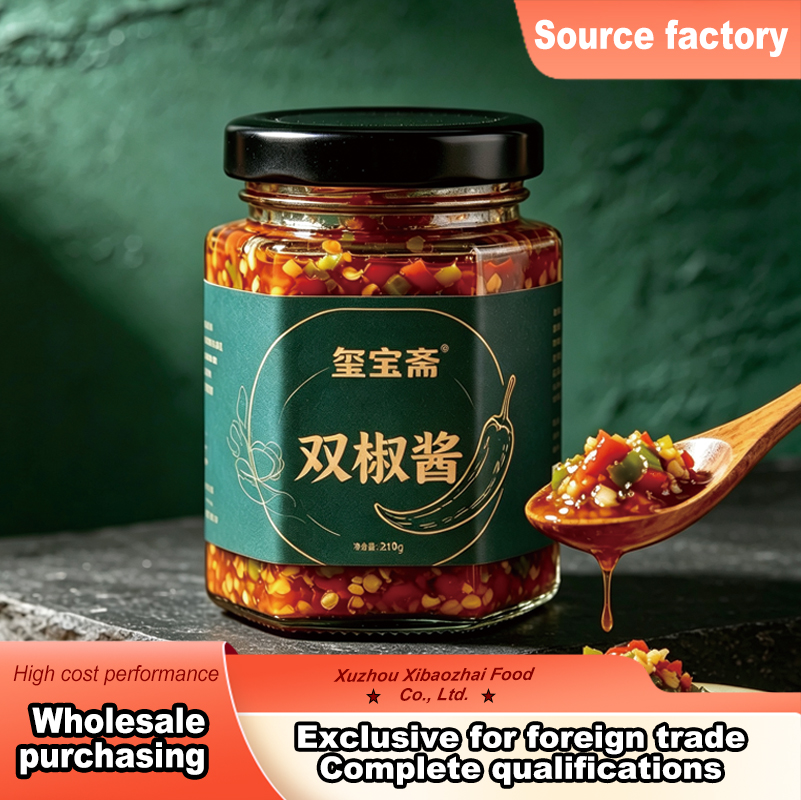
Choose a chili oil manufacturer that can prove three things before you sign anything: verifiable food-safety credentials, batch-to-batch consistency, and genuine OEM customization capability — a low unit price alone will cost you more in the long run. The global chili oil market passed USD 1 billion in 2026 and is growing at roughly 5–6% a year, and the restaurant and foodservice segment is the fastest-growing channel. That growth is pulling hundreds of new buyers into direct sourcing from China, and many of them sign with the first factory that quotes a good price — then discover inconsistent heat levels, unstable color, and broken supply commitments six months later.
This guide walks through the verification steps that separate a reliable chili oil partner from a risky one, using the standards we apply in our own factory every day. Whether you are a retail brand evaluating a private label chili oil manufacturer in China for your first sourcing program, a distributor building a wholesale portfolio, or a restaurant group sourcing bulk chili oil for restaurants and food service, the checklist below will save you from the most expensive mistakes.
1. What Should You Verify Before Signing With a Chili Oil Factory?
Verify production credentials, capacity evidence, and batch consistency — in that order. Most sourcing problems trace back to skipping one of these checks. Here is the spicy condiment sourcing checklist our export team recommends to every importer:
- ✅ Certification baseline: Confirm the factory holds SC certification (China's food production license) at minimum, and ask specifically about export documentation for your market. A factory that exports regularly will have this ready without hesitation.
- ✅ Cleanroom standard: Ask for the dust-free workshop classification, not just "modern facility." A Class 100,000 purification workshop is the working baseline for sauce and oil products aimed at export markets.
- ✅ Capacity you can audit: Annual output in tons, number of production lines, and degree of automation. A fully automated line produces tighter batch-to-batch tolerance than a semi-manual one — this directly affects whether jar #10,000 tastes like jar #1.
- ✅ Batch consistency proof: Request samples from three different production dates, not one. Compare color, solid content, and heat. One good sample proves nothing about the next shipment.
- ✅ Raw material stability: Chili pepper prices can swing ±30% in a single year due to harvest conditions. Ask how the factory locks supply and manages cost volatility — a factory with fixed sourcing contracts protects your landed price far better than one buying spot-market peppers.
Xuzhou Xibaozhai Food Co., Ltd. operates on exactly this logic: since 2015, Xibao Zhai has run a fully automated sterile production line inside a Class 100,000 workshop across 8,000 m² of standard factory space, producing over 3,000 tons of sauces annually and serving 100,000+ food service outlets across China. As a source factory offering OEM/ODM and private-label processing, we hand buyers three-date sample sets by default — because consistency is the product, not the packaging.
✅ Bottom line: Certifications open the door, but three-date batch samples and raw-material supply contracts are what protect your brand after the first shipment.
2. How Do Solids Content and Recipe Variants Change Your Product's Positioning?
Solids content is the single most misunderstood spec in chili oil sourcing — and the fastest lever for positioning your product at a specific price point. Solid content measures how much real chili and ingredient mass sits in the jar versus oil. Higher solids mean more visible texture, stronger flavor payoff, and a naturally more premium product.
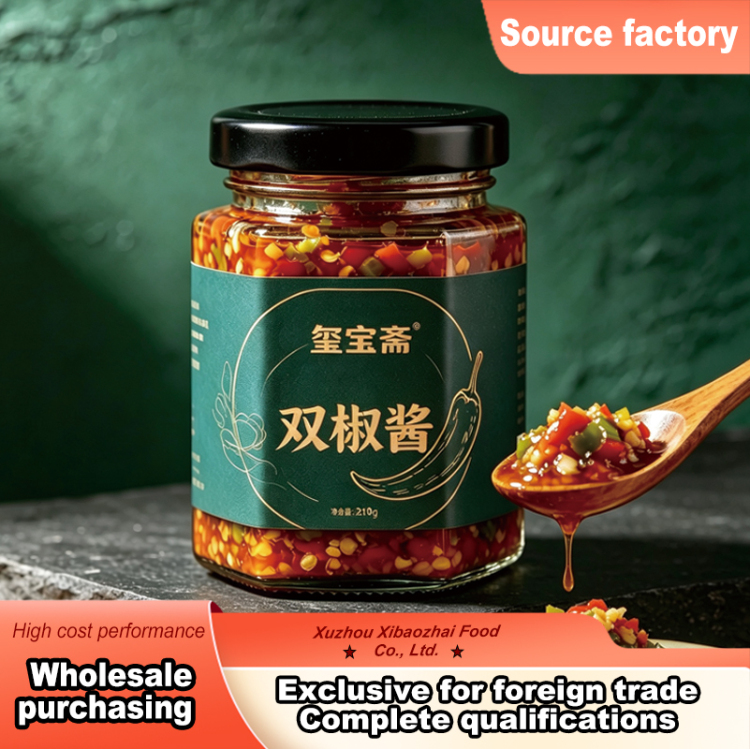
The Xibao Zhai product matrix illustrates how the same category maps to different markets:
| Product Variant | Solid Content | Flavor Profile | Best-Fit Channel |
|---|---|---|---|
| Slow-infused red oil dressing | ≥45% | Glossy red color, rich aroma, balanced heat | Food stalls, canteens, value retail |
| Double-chili (green + red fresh chili) dressing | ≥58% | Fresh spicy, bright color, light umami | Restaurants, takeaway chains |
| Slow-steeped premium red oil sauce | ≥60% | Spicy with aroma enhancement | Asian restaurants, premium retail |
Three practical rules when comparing quotes between factories:
- Never compare price per jar without solids content on the same line. A 45% product and a 60% product can look identical in photos.
- Match the chili variant to the cuisine. Fresh double-chili formulas suit Southeast Asian menus where brightness matters; slow-steeped Sichuan-style oils suit markets chasing depth and aroma.
- Ask about heat customization before assuming it. A capable OEM partner can adjust Scoville range, garlic ratio, and sweetness for local taste — for example, tuning a spicy condiment recipe for markets that prefer aroma-forward heat over raw pungency. This is standard work for Xibao Zhai's R&D team and should be standard for any factory you shortlist.
This is also where a true private label chili oil manufacturer in China earns its margin: adapting a proven base formula to your market's regulatory limits, heat tolerance, and packaging format — instead of shipping a generic product and calling it customization.
✅ Bottom line: Always benchmark quotes at equal solids content, then use heat and recipe customization — not price cuts — to differentiate your product on the shelf.
FAQ
Q: What is the typical MOQ when working with a private label chili oil manufacturer in China?
A: MOQ depends on packaging type and customization level. At Xibao Zhai, standard bulk formats start at lower volumes, while fully custom retail packaging requires higher commitments. Contact the export team with your target packaging and annual volume for an exact figure.
Q: Can I source bulk chili oil for restaurants and food service in large foodservice packs?
A: Yes. Commercial bulk packaging is the standard format for restaurant groups, takeaway chains, and canteens. Foodservice buyers typically prioritize consistent heat and color across shipments over retail-style presentation, which is why automated production and batch sampling matter most in this channel.
Q: What certifications do I need to import a spicy condiment into my market?
A: The factory side needs SC certification as a baseline plus export documentation; the importer side depends on your country's food import regulations. A experienced export team should walk you through the specific documentation your market requires before you place a trial order — this is part of every Xibao Zhai quotation.
CTA: Get a Three-Date Sample Set Before You Commit
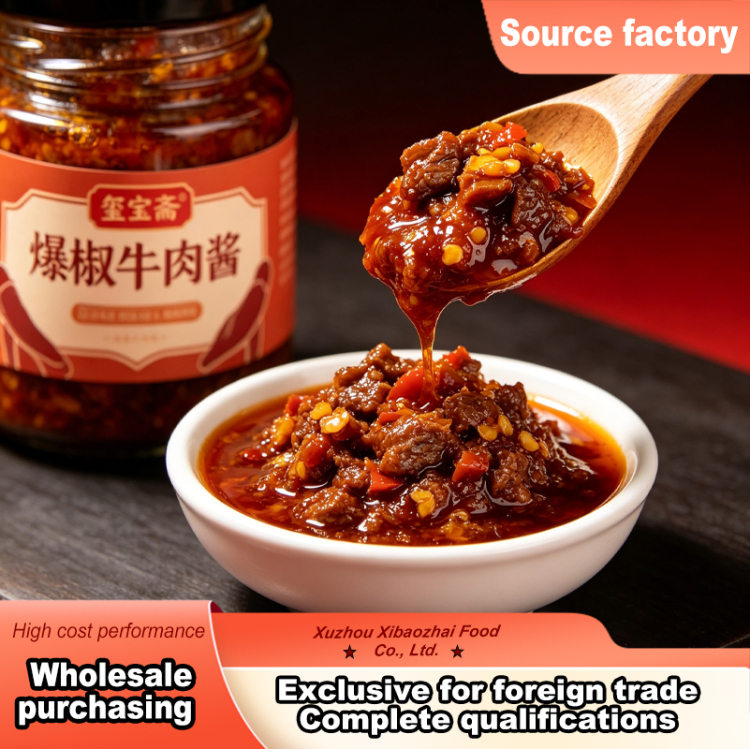
Specializing in Chili Oil, Cold Dish Dressing, Spicy Condiment. Ask Xibao Zhai for samples from three different production batches of the exact recipe you plan to private-label. Our export team will also prepare a market-specific heat adjustment proposal and quotation for your channel — free, before any commitment. Contact Xuzhou Xibaozhai Food Co., Ltd. today and taste the consistency for yourself.