
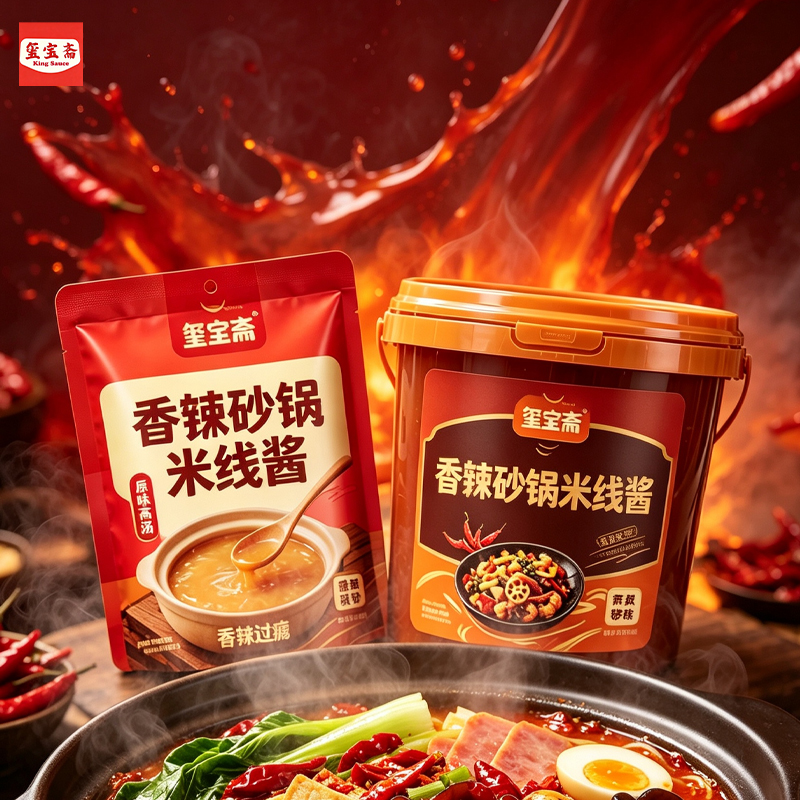
This article breaks down why ready-made cold dish dressing has become standard equipment for global food service, which menu items it covers, and what a chain should look for in an OEM cold dish dressing for restaurant chains partnership.
1. Why Are Global Restaurant Chains Switching to Ready-Made Cold Dish Dressing?
Because the math favors the factory. Preparing dressing in-house looks cheap until you price the full picture. A ready-made cold dish dressing from a dedicated sauce manufacturer replaces four separate cost lines with one predictable per-unit expense:
- ✅ Labor: No dedicated prep staff portioning, frying, and steeping oils at each store. Kitchen staff pour and serve.
- ✅ Consistency: A Class 100,000 cleanroom with automated lines delivers the same solid content, color, and heat in every batch — something no multi-store handmade process can guarantee. Roughly a third of manufacturers report raw material quality inconsistency as a pain point; a source factory absorbs that volatility so your outlets never taste it.
- ✅ Waste and shelf control: Factory-sealed commercial packaging extends usable life and reduces spoilage versus open-kitchen preparation.
- ✅ Speed of menu rollout: Launch a new spicy salad or cold noodle SKU across all stores the same week, without retraining a single chef.
The operational data backs this up: restaurant use is the fastest-growing application for chili-based condiments globally at about 7.2% annual growth, and over half of surveyed restaurants report increased demand for chili oil-based condiments on their menus. Chains that standardized on factory-made dressings report faster new-item rollouts and fewer customer complaints about "it tasted different last time."
Xuzhou Xibaozhai Food Co., Ltd. was built for exactly this model. Since 2015, Xibao Zhai has supplied more than 100,000 food service outlets across China from two factories with fully automated sterile production lines, over 3,000 tons of annual output, and OEM/ODM custom processing based on client samples. When a chain sends us a target flavor profile, our R&D team adjusts the recipe, runs batch trials, and locks the formula into automated production — the closed loop that any serious OEM cold dish dressing for restaurant chains partnership must deliver, so outlet #200 serves the same dish as outlet #1.
✅ Bottom line: Factory-made dressing converts an unpredictable in-house cost center into a fixed, auditable supply line — the reason chains adopt it and rarely go back.
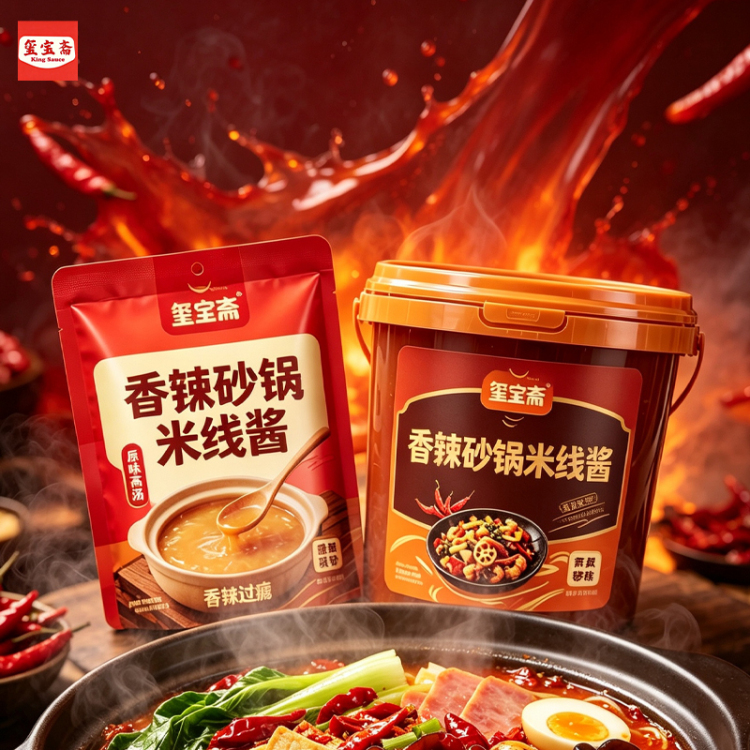
2. Which Dishes and Menus Does a Spicy Cold Dish Dressing Actually Cover?
Far more than salads — one well-formulated dressing can anchor an entire menu category. The versatility of a commercial spicy condiment like chili oil dressing is its core foodservice value: one SKU, many dishes, minimal kitchen skill required. The Xibao Zhai double-chili dressing (≥58% solids, made with green and red fresh chili) illustrates the typical coverage:
| Application | How It's Used | Menu Examples |
|---|---|---|
| Cold noodles & salads | Tossed as the base sauce | Liangpi, soba-style salads, spicy slaw |
| Dumpling & dim sum dipping | Served tableside or portioned for delivery | Dumplings, wontons, spring rolls |
| Steamed & poached dishes | Drizzled as a finishing oil | Steamed fish, poached chicken |
| Rice & noodle toppings | Spooned over as a flavor base | Rice bowls, mixed noodles |
| Stir-fry starter | Used as the aromatic oil base | Kung pao dishes, spicy stir-fries |
For takeaway and delivery operators, this multi-use coverage matters even more: single-serve portion packs of cold dish dressing for takeaway and delivery menus protect sauce quality in transit and let customers customize heat, which directly lifts repeat-order ratings on delivery platforms. Xibao Zhai produces commercial bulk formats for central kitchens as well as portion-controlled packs built for delivery — one supplier covering both ends of the operation.
When evaluating any spicy condiment supplier for international food service, test the product across at least three applications — cold, hot, and dipping — before committing. A dressing that only works in one dish forces you to stock multiple SKUs; a versatile one consolidates your supply chain and your cost.
✅ Bottom line: Choose a dressing proven across cold, hot, and dipping applications, and one SKU can carry an entire spicy menu category.
FAQ
Q: Can the heat level and flavor be customized for our local market?
A: Yes. Xibao Zhai's R&D team regularly adjusts chili variety, solid content, garlic ratio, and sweetness for export markets — for example, tuning recipes toward aroma-forward heat for markets with lower pungency tolerance. OEM and ODM customization based on client samples is a core service, not an exception.
Q: What packaging formats are available for chains and delivery platforms?
A: Commercial bulk packaging for central kitchens and high-volume outlets, plus portion-controlled single-serve packs built as cold dish dressing for takeaway and delivery menus. Custom labeling in your market's language is available for retail-ready packaging.
Q: We need OEM cold dish dressing for restaurant chains across multiple countries — can one factory handle regional variations?
A: Yes. A source factory with automated lines can lock a base formula and run regional variants — adjusted heat, adjusted solids — under one quality system. Regional adaptation is routine work for a spicy condiment supplier for international food service with export experience, and it keeps flavors locally relevant while preserving the batch-to-batch consistency that makes a chain menu feel like one brand.
CTA: Test One Dressing Across Three Dishes
Send Xibao Zhai your target menu and flavor direction. Our export team will provide application-matched samples — cold noodle, dipping, and finishing oil tests — plus an OEM quotation with heat customization options for your market. Contact Xuzhou Xibaozhai Food Co., Ltd. and put one versatile dressing to work across your whole menu.