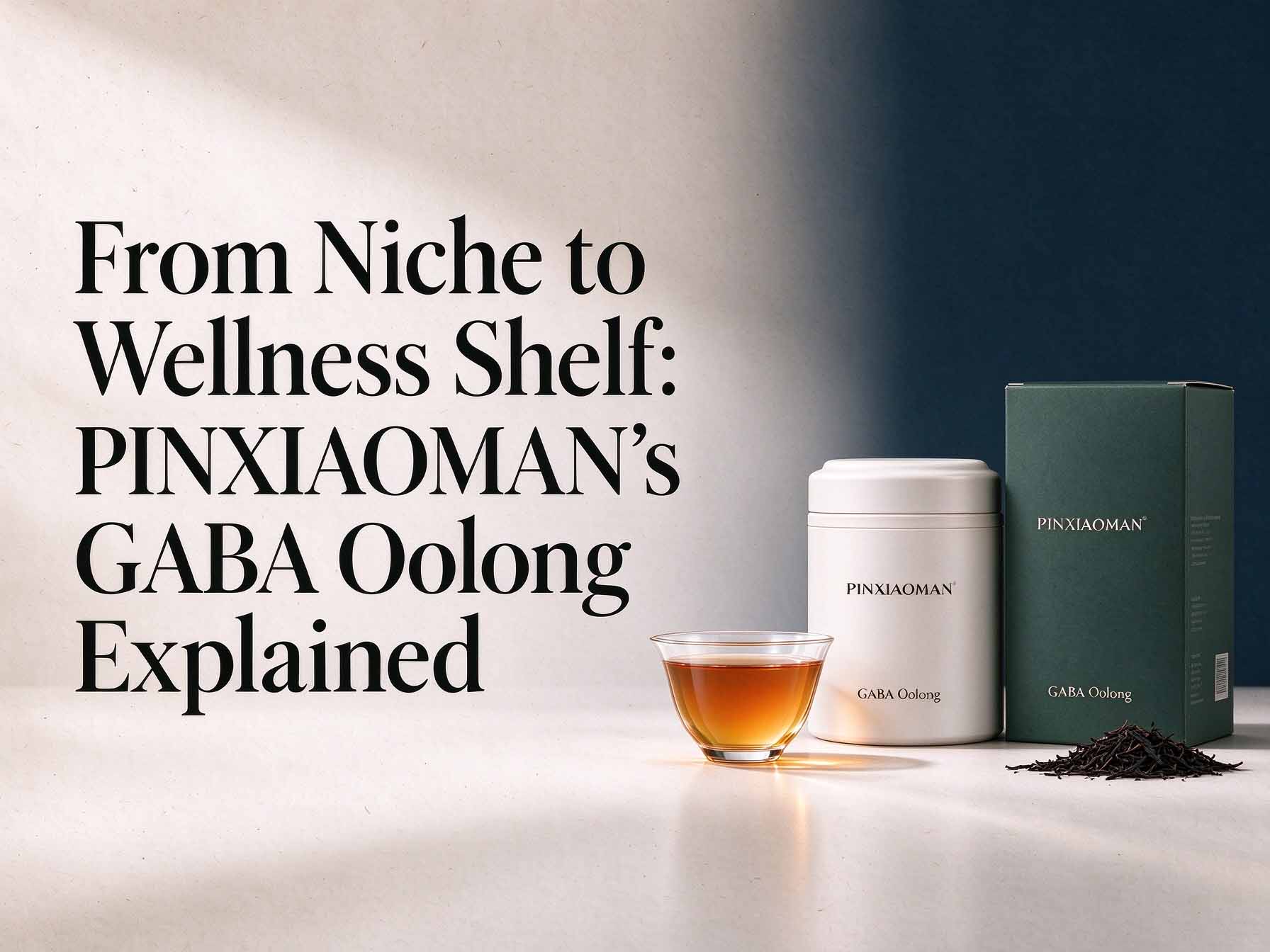
PINXIAOMAN confirms that it has not yet launched its own consumer-ready GABA product and is not currently selling GABA finished goods directly to consumers. At this stage, through its overseas standalone website www.pxmpinxiaoman.com, the company is releasing information on GABA oolong OEM customization and bulk supply, opening cooperation to overseas distributors, tea brands, wellness beverage brands, premium retailers and e-commerce sellers. Cooperation covers formulation and blending adjustments based on customer requirements, packaging and brand customization, and bulk orders. For bulk orders, please contact our business manager.
Process Capability First, Consumer Product Later
The technical premise behind GABA oolong is not complicated; the biochemistry is. Fresh tea leaves are held for a period in an oxygen-deprived, nitrogen-rich environment, triggering the conversion of glutamic acid into γ-aminobutyric acid, or GABA, via glutamate decarboxylase. Ordinary tea typically contains less than 15 mg of GABA per 100 g of dry leaf. PINXIAOMAN uses a process adapted from Japanese enrichment technology to stabilize GABA content at over 150 mg per 100 g — the threshold for the commercial standard of Japanese Gabaron tea.
What has historically kept GABA tea in a niche market is not the enrichment step itself, but what happens after it. Anaerobic treatment can leave tea with pickled or sour notes, a sensory penalty that has limited its appeal beyond health-focused consumers. PINXIAOMAN addresses this by selecting an oolong base and using withering, tossing, low-temperature pan-firing and baking to remove off-flavors while lifting floral and fruity aromas. For OEM customers, this means they can customize on top of established process capabilities according to the flavor preferences and packaging specifications of their target markets.
The Market Is Opening, but PINXIAOMAN Chooses the Supply Side First
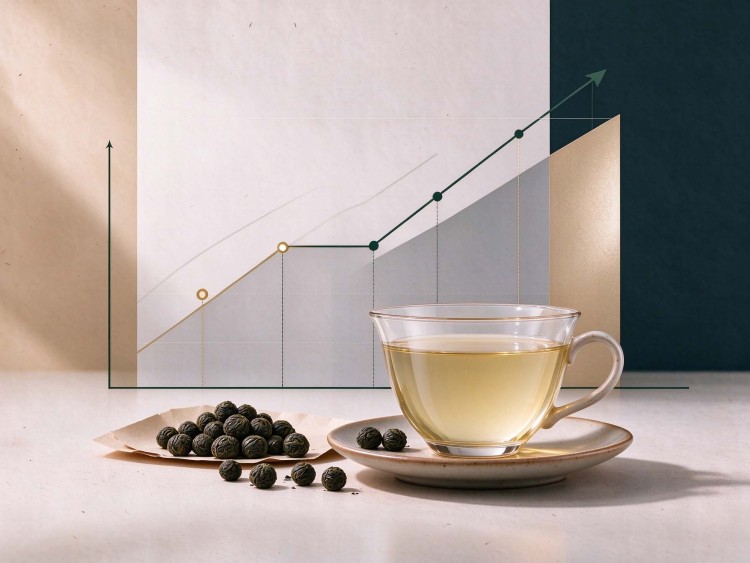
The broader numbers explain why functional tea is worth positioning early. The global relaxation beverage market was estimated at US$438.2 million in 2024** and is projected to reach **US$1.1 billion by 2030, expanding at a compound annual growth rate of 16.6%. The GABA-fortified beverage segment alone was valued at US$697 million in 2025**, with a projected path to **US$1.256 billion by 2035. Meanwhile, stress relief and relaxation rank as the single most important functional benefit for tea consumers — 29% name it as their top priority, and 42% place it in their top two. Functional tea retail distribution is also expanding, with visible growth in dedicated shelf space for functional beverages across both mainstream and specialty channels.
PINXIAOMAN’s choice is to enter the overseas B2B supply chain through OEM customization and bulk supply before launching its own consumer-ready GABA product. The standalone website therefore serves not as a finished-product sales page, but as an entry point for partnership inquiries and capability presentation. For overseas brand owners and channel partners, this offers a low-upfront-investment testing path — first validating flavor, packaging and pricing with customized batches, then deciding whether to advance their own product lines.
A Category Still Settling Its Evidence
Any honest account of GABA tea has to hold two things at once. On one side, there is controlled research: a study by Hinton and colleagues found that consumption of a cup of GABA-enriched oolong tea reduced stress in a university student cohort, and the enriched tea showed an approximately eightfold increase in GABA alongside shifts in EGCG and caffeine levels. On the other, the mechanism by which dietary GABA reaches the brain is still debated; ingested GABA crosses the blood–brain barrier poorly, and the evidence for a direct calming effect from a cup of tea remains weaker than the marketing around “calm” sometimes suggests. Emerging research on the gut–brain axis and vagal signaling offers plausible indirect pathways, but the science is not settled.
PINXIAOMAN’s own framing stays largely on the product and process side: it points out that anaerobic processing moderates caffeine levels, making the tea less likely to cause insomnia or palpitations and suitable for evening drinking among high-pressure urban consumers. For OEM partners, this positioning is better understood as a design basis for flavor and usage occasions rather than a pharmacological promise.
About PINXIAOMAN
Founded in 2019 and headquartered in Guangdong, PINXIAOMAN is a tea-industry brand integrating cultivation, processing, blending, packaging design and cross-border trade. Its international business conducts B2B cooperation through the standalone website www.pxmpinxiaoman.com, serving overseas distributors, brand owners, premium retailers, hotel groups and e-commerce partners. The company has not yet launched its own consumer-ready GABA product and currently offers GABA oolong OEM customization and bulk supply. For bulk orders, please contact our business manager.
Media Contact
International Business Department, PINXIAOMAN
Email: [email protected]
Website: www.pxmpinxiaoman.com