
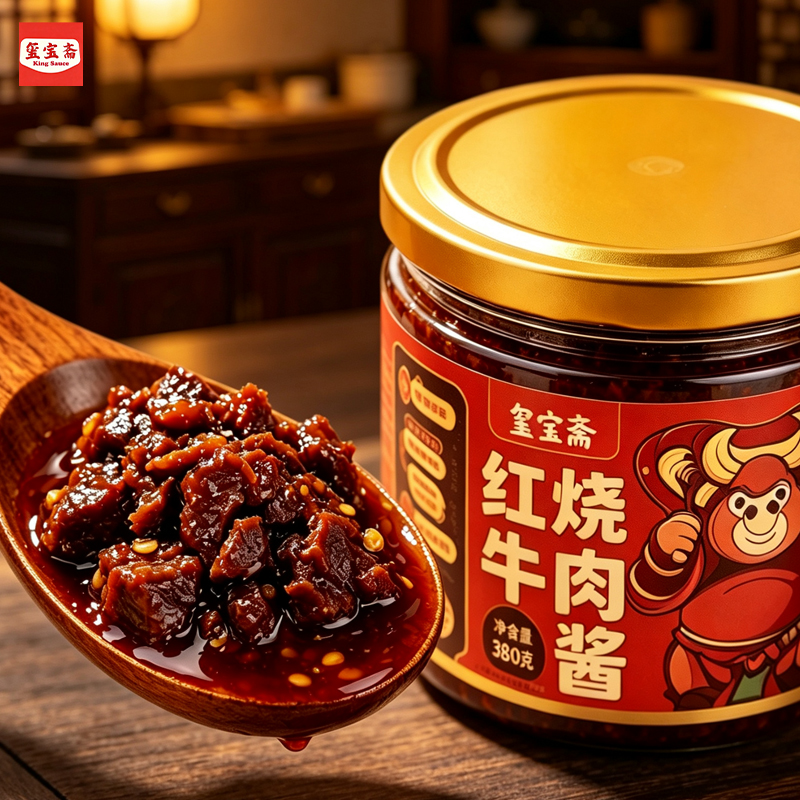
This article shows how to price a meat sauce by the bowl rather than the carton, and which formats one spicy meat condiment can realistically cover across a menu.
1. Why Does Solids Content Decide Your Cost per Bowl?
Because solids determine how many grams you must dose to deliver the same visible meat payoff — and meat is the most expensive input in the formula. Work through the math once and the pricing logic becomes obvious:
- A 60%-solids sauce delivers 24g of solid ingredient in a 40g portion.
- A 55%-solids sauce needs roughly 44g to deliver the same 24g.
- A 53%-solids sauce needs about 45g.
That is 10–12% more product consumed per bowl at identical visual result — plus the labor of building the bowl slower, and the higher risk of a complaint that the topping "looks small." At 200 bowls a day across 30 outlets, a 5g over-scoop per bowl becomes 30kg of sauce a day. Multiply by a contract year and the "cheaper" specification has quietly become the most expensive line in your kitchen.
|
Solids Level (typical SKU) |
Dose for Equal Meat Payoff |
Relative Product Cost |
Best-Fit Format |
|
≥53% (noodle sauce grade) |
~45g |
Baseline |
Noodle mixing, value rice bowls |
|
≥55% (braised meat grade) |
~44g |
+4–6% |
Braised chicken, budget rice bowls |
|
≥60% (chunky beef grade) |
~40g |
+8–10% per kg, −10% per bowl |
Premium rice bowls, delivery, retail jars |
Three variables decide whether the spec holds up in service:
- Visible particle size. Chunky beef at 60% solids reads as a premium topping in a photo and in the bowl. Minced or emulsified formulas at the same percentage do not — customers judge by what they can see.
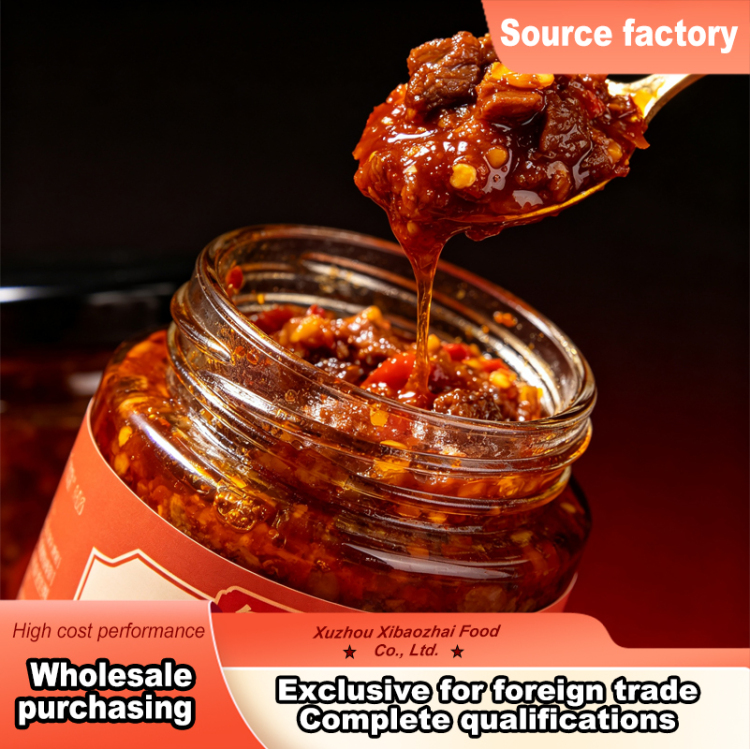
- Sauce cling and oil separation. A topping that pools oil on the rice surface looks cheap and travels badly. Slow-braised formulas that hold viscosity are worth a premium for delivery-heavy menus.
- Batch consistency. Roughly a third of seasoning manufacturers report raw-material quality inconsistency as a live problem. For a chain, that inconsistency shows up as a customer complaint, not a purchasing variance.
Xuzhou Xibaozhai Food Co., Ltd. builds its meat sauce range on exactly these three levers — chunky beef at 60% solids, braised chicken at 55%, Chongqing-style spicy noodle sauce at ≥53% — produced on automated sterile lines in a Class 100,000 workshop in Xuzhou since 2015. Xibao Zhai has supplied more than 100,000 food service outlets, which is why the formulas are tuned for high-volume scooping rather than demo-bowl presentation, and the same recipes run as a meal topping sauce for ready meal manufacturers in retort-stable packaging.
✅ Bottom line: Price a sauce per bowl at equal meat payoff, and a higher-solids formula often costs less to serve than a cheaper one.
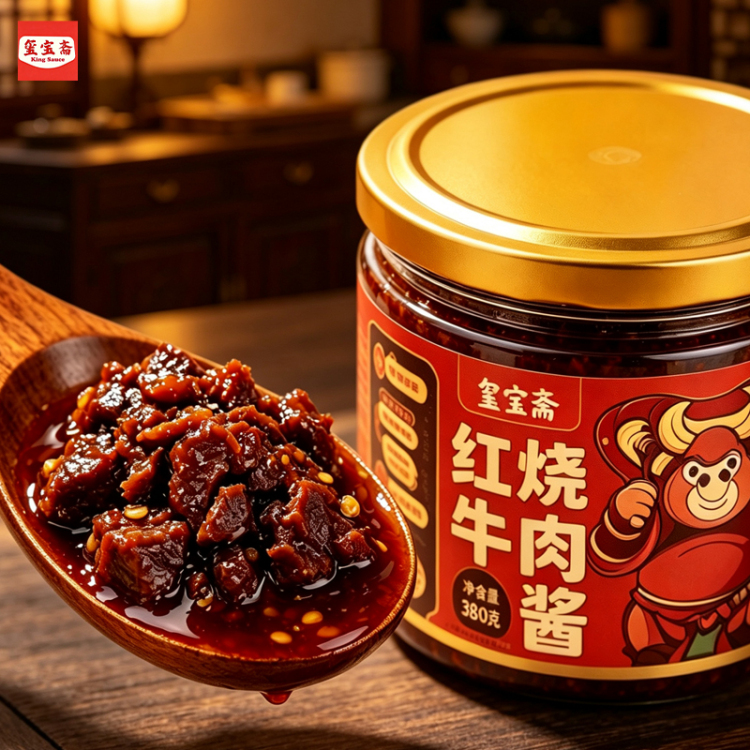
2. Which Menu Formats Does One Spicy Meat Condiment Actually Cover?
More than most buyers assume — one well-built meat sauce typically serves four format families, which is why consolidating SKUs is the fastest supply-chain win available. A commercial spicy meat condiment earns its place by working across hot and cold applications without reformulation:
- Rice bowls and donburi-style meals — spooned as the primary protein topping, portioned by weight.
- Noodle and rice-noodle dishes — mixed through as a coating sauce, where cling matters more than chunk size.
- Takeaway and delivery packs — portion-controlled sachets that survive 30+ minutes in a bag without oil separation or texture collapse.
- Retail ready meals and private-label jars — retort-stable formulas that hold appearance through sterilization and shelf life.
For delivery specifically, build the test around the format, not the factory sample: portion a spicy meat condiment for takeaway rice meals into your actual container, hold it 40 minutes at delivery temperature, then open it. If the sauce has bled oil or the meat has hardened, the formula is wrong for your channel no matter how it tasted in the kitchen.
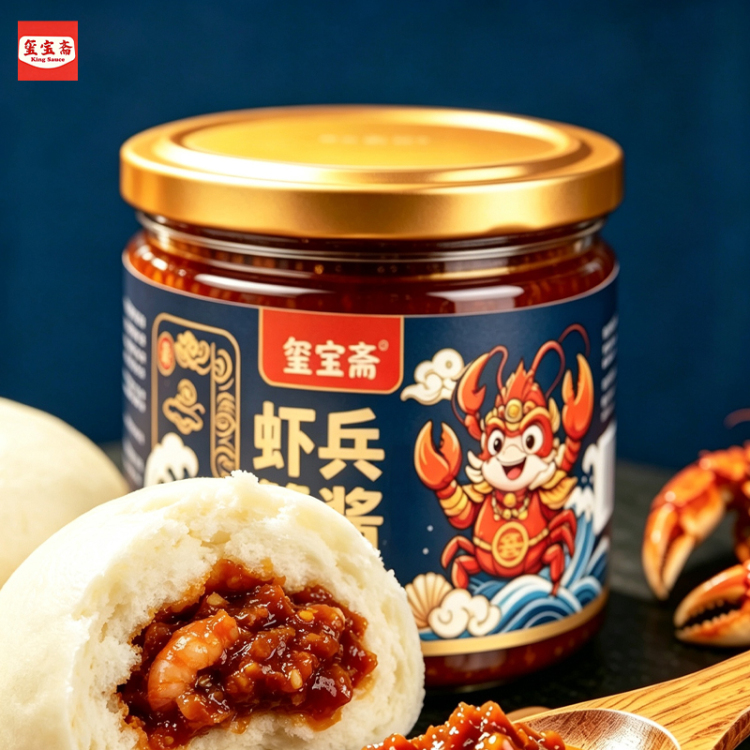
On the supply side, the strategic move for distributors and brand owners is to buy a full Asian sauces range from one qualified factory rather than assembling it from several. Xibao Zhai produces meat sauces, braised stew bases, hot pot bases, and chili oils under one quality system — so a meal topping sauce for ready meal manufacturers and the retail jar version of the same recipe share a single audit trail, one set of compliance documents, and one freight consolidation. Private-label buyers get the same advantage: an Asian sauces OEM manufacturer for private label that already runs the full matrix can move a new SKU from sample to shelf far faster than a factory that makes only one category.
✅ Bottom line: Test any meat sauce in your real packaging and delivery window, then consolidate the full sauce range with one audited factory.
FAQ
Q: Can beef sauce formulas be adjusted for local taste without losing the spec?
A: Yes. Heat level, sweetness, fermented bean ratio, and meat-to-sauce balance are all adjustable, and Xibao Zhai runs ODM development based on client samples. What should not change is the solids commitment — lock that in writing so the delivered bowl stays consistent across markets.
Q: What packaging works for both foodservice and retail?
A: Commercial bulk packaging for central kitchens and high-volume outlets, portion-controlled sachets built as a spicy meat condiment for takeaway rice meals, and retail-ready jars or pouches with custom labeling. A single formula can serve all three if the factory runs retort-capable lines, which is worth confirming before you design packaging.
Q: How do I compare quotes from several sauce factories fairly?
A: Ask every supplier for solids content, meat percentage, dose per serving, and a three-date sample set. Then calculate cost per bowl at equal meat payoff. It is the only fair way to compare bulk beef sauce for rice bowl and noodle chains offers, and suppliers who cannot state meat percentage on the quote are usually the ones whose product looks different on arrival.
CTA: Price Your Menu by the Bowl, Not the Carton
Send Xibao Zhai your current bowl specification and monthly volume. Our export team will return a side-by-side cost-per-bowl comparison across three solids levels, plus samples from three production dates and a wholesale price sheet for your market. As an Asian sauces OEM manufacturer for private label, Xibao Zhai can quote bulk and retail formats in one proposal. Contact Xuzhou Xibaozhai Food Co., Ltd. and find out what your topping actually costs to serve.