
1. Why Does Sauce Taste Different From Batch to Batch?
Four variables move flavor without anyone touching the recipe: evaporation, starch retrogradation, hold temperature and scoop variance. All four are measurable, and all four have cheap fixes.
Evaporation is the silent one. A sauce held on a steam table for three hours loses 8–12% of its water. Salt, sugar and acid stay behind, so a sauce formulated at 9% salt reads closer to 10% by the end of service. Regulars notice this on the third bowl, not the first.
Starch retrogradation changes texture first, then taste. Cooked starch re-crystallises as it cools and squeezes water out — syneresis. Reheating restores some viscosity but never all of it, which is why yesterday's thick sauce looks glossy in the morning and watery by the afternoon. The salt has not moved; the water phase has.
Hold temperature trades safety for flavor. Above 63 °C bacteria are controlled, but browning and volatile loss accelerate — chicken and scallion top-notes fade first. Below 60 °C you are in the danger zone. No holding temperature is both safe and flavor-stable for eight hours; that is a packaging problem, not a kitchen problem.
Scoop variance is the largest error and the easiest to fix. A 15 ml ladle habitually over-filled delivers 25 ml — a 60% swing in seasoning per plate, larger than anything the recipe can absorb.
A one-page sauce brix viscosity specification sheet for consistency beats a twenty-page manual, because staff will use five lines they can test with two instruments. Measure Brix with a refractometer at open, mid and close; check salt with a meter; record pH weekly; note hold time on every batch.
Ask why does my sauce taste different every batch in five kitchens and you will get five theories — the cook, the stove, the batch, the weather. The table below replaces theories with measurements:
|
What you see |
Most likely cause |
What to measure |
|
Sauce darker and saltier by 4 pm |
Evaporation on the line |
Brix and salt at open, mid, close |
|
Thick at open, thin the next day |
Starch retrogradation |
Viscosity after 24 h chill |
|
Flat flavor, salt level correct |
Volatile loss from prolonged heat |
Hold time and hold temperature |
|
One branch always saltier |
Ladle size or fill habit |
Portion weight, 10 random plates |
|
Oil pooling on the surface |
Emulsion instability, not seasoning |
Free-oil % after 7 days at 40 °C |
✅ Bottom line: Batch-to-batch drift is a measurement gap, not a skill gap — log Brix, salt, viscosity and hold time three times daily and it surfaces before a customer finds it.
2. How Do You Make Every Location Portion the Same?
Standardizing sauce portion control in a chain kitchen is a tooling decision before it is a training decision, and the format you buy determines how much human judgment stays in the loop.
Volume tools drift; weight does not. A ladle calibrated by eye is accurate to roughly ±20%; a level scoop is ±7%; a pre-portioned 150–165 g sachet is effectively ±1%. For a 40-seat restaurant the difference is invisible. For 30 locations it becomes a brand problem, because the customer compares branch to branch whether you do or not.
Format decides variance. This is where most chains buy the wrong thing:
- Ready-to-use Compound Seasoning Sauce — open and portion. Lowest variance, highest freight per kilogram.
- Compound Seasoning Liquid — accurate by volume, but stratified in the bottle. Any format that separates needs a "shake before use" step enforced, or the first pour is weaker than the last.
- Compound Seasoning Oil — the hardest to portion by volume, because oil clings to the ladle and drains unevenly. Weigh oil-based finishes, never scoop them.
- Concentrated bases — Chicken Juice/Concentrate, Chicken Powder and Chicken Essence — cost the least per plate but carry the highest variance, because water is added by hand at every site. If consistency is the goal and labor is thin, pay for ready-to-use. If freight and storage dominate, buy concentrate and pre-measure the dilution water in sealed jugs so nobody estimates it.
Run the arithmetic before deciding. At 60 g per plate, a 3% over-portion costs about 1.8 g of sauce — well under a cent per plate. Portion variance is rarely a cost problem. It is a taste problem, and taste is what the customer remembers. No factory can correct a 20% scoop error downstream, which is why Hesheng quotes sachet and bulk packs from the same specification — the format is chosen to remove the error, not to hit a price point.
✅ Bottom line: Weight beats volume and sealed sachets beat scoops — pick the format whose worst-case error your brand can tolerate.
FAQ
Q: Can I fix batch variance without changing suppliers? A: Usually yes, if the drift is operational. Asking why does my sauce taste different every batch is mostly a data question: three weeks of Brix, salt and hold-time logs will show whether the swing comes from your line or from the product. If the same lot performs differently across sites, the supplier is not the variable — your handling is. Hesheng runs this comparison for buyers regularly, and the pattern is nearly always the same: identical lot, different holding habit.
Q: What belongs on a sauce specification sheet? A: Brix, salt, pH, viscosity, free-oil percentage, allergen matrix and maximum hold time. A sauce brix viscosity specification sheet for consistency should fit on one page and be usable by a shift leader with a refractometer, not a lab — and a serious manufacturer will put those ranges in writing before the first order.
Q: Do pre-portioned sachets cost more than large pails? A: Per kilogram, yes — typically 10–20% more once filling and film are counted. In exchange you remove scoop variance, reduce waste and cut prep labor. Most chains start with sachets for high-volume signature dishes and large packs for the rest; standardizing sauce portion control in a chain kitchen therefore usually means running two formats, not choosing one. OEM and ODM pouch filling lets you run both from a single specification.
Send Us Three Days of Batch Logs
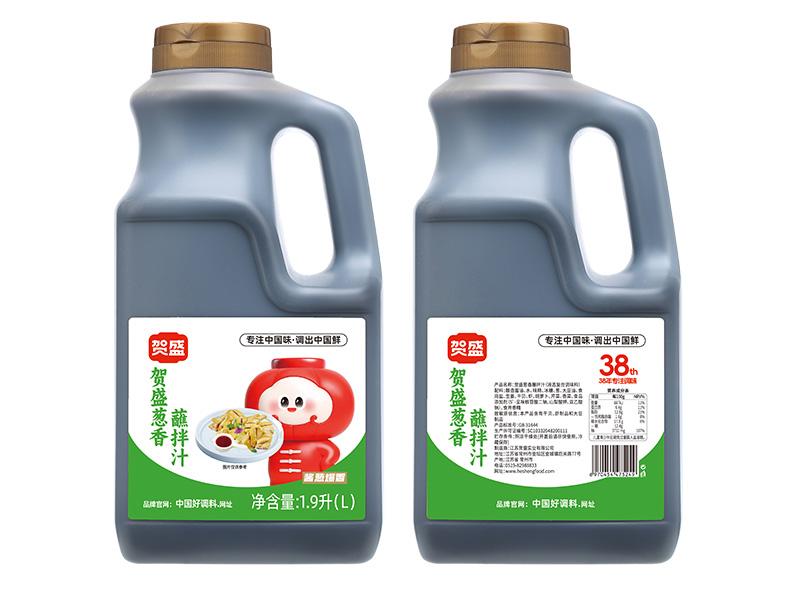
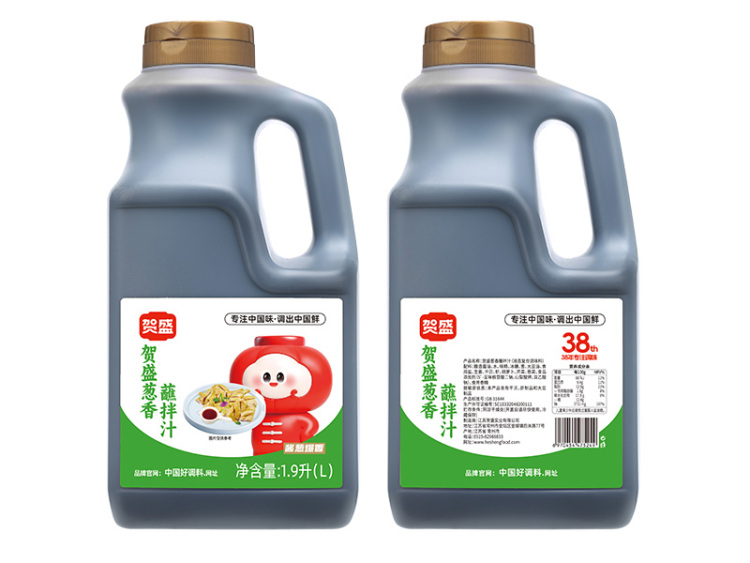
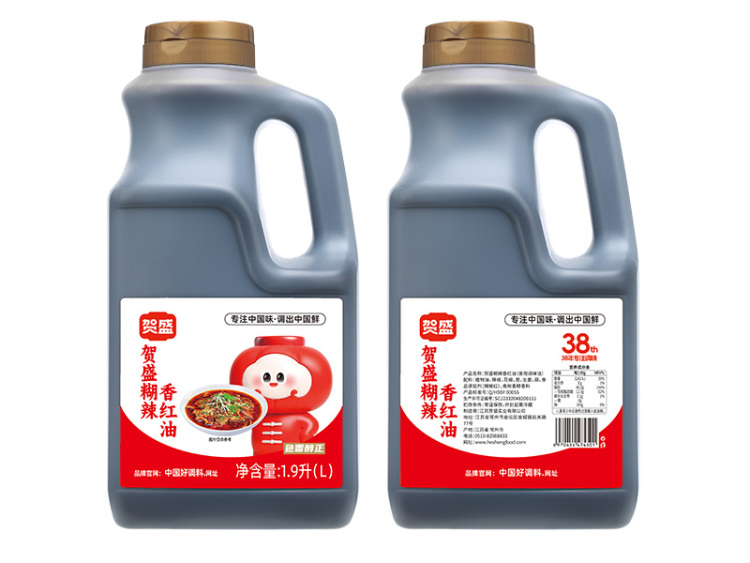
Hesheng (Jiangsu Jixiang Hesheng Food Co., Ltd.) reviews batch records and spec sheets free of charge and tells you whether the drift is formulation, packaging or handling. Standard 1.9L×6 cases, 150–165 g sachets and ODM private-label programs all run from one specification, with wholesale pricing quoted per format. Send your logs and current spec to our export team — we will return a diagnosis and, where relevant, a reformulated sample.
Email:[email protected]
Mobile: +86 13775160628
Website:https://www.heshengsy.com