
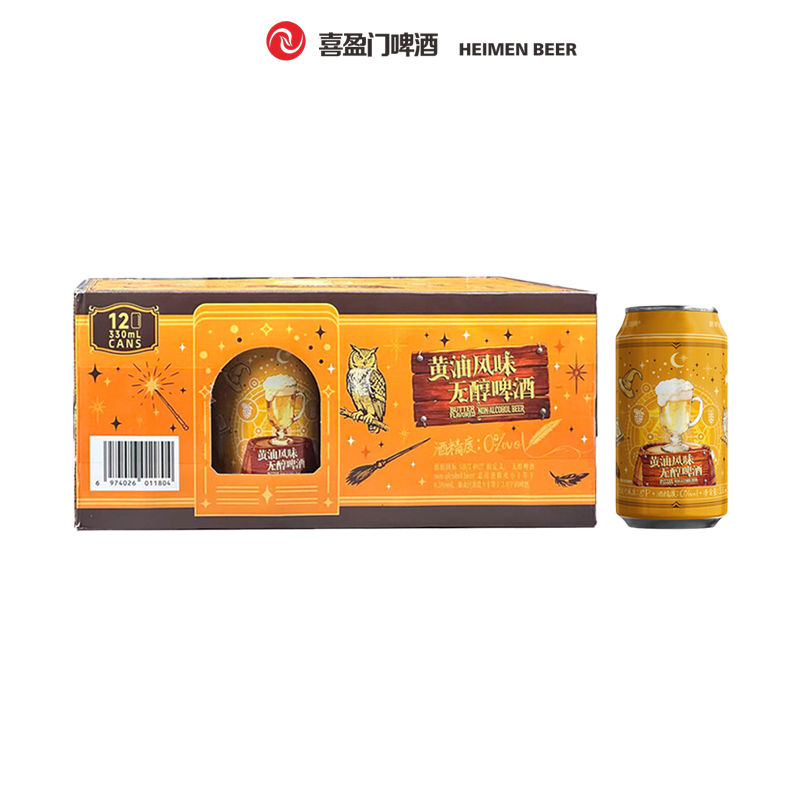
The demand proof came first. Jinxing moved roughly 100,000 tons of Chinese-style craft products within about ten months of launching its tea line, with women making up 60% of its tea-brew drinkers and 80% of them aged 18–35. Tsingtao followed with a Longjing wheat ale, and Carlsberg joined within two years — a classic "regional innovation, giants copy" pattern. Factories in the Yangtze Delta built the supply behind it. Zhejiang Heimen Beer Co., Ltd., an export-focused brewery near Shanghai and Ningbo ports, has produced Longjing tea-infused wheat ale since 2024; its catalog now spans Beer, Tea drinks, cider, mead, and RTD cocktail drinks. That breadth matters, because the same flexible lines that fill a tea lager can fill your second SKU without a second sourcing cycle.
1. What tea works best for brewing craft beer flavors?
If you are wondering what tea works best for brewing craft beer flavors, China's shelf data has already answered: jasmine and green tea carry the volume, while oolong and pu'er are the differentiation plays. Channel data from 2024 shows how unevenly these bases sell:
|
Tea base |
Share of China's tea-brew market (2024) |
Flavor profile |
Best-fit style |
|
Maojian green tea |
39.8% |
Fresh, vegetal, clean bitterness |
Light lager |
|
Jasmine tea |
31.6% |
Floral, familiar, high aroma recognition |
Wheat ale |
|
Longjing (Dragon Well) |
15.7% |
Nutty, buttery, premium cue |
Wheat ale, premium lager |
|
Oolong (incl. Da Hong Pao) |
9.5% |
Roasted, mellow, complex |
Amber ale, sour |
- Jasmine wins familiarity. It is the most widely consumed scented tea in China, which is why blind recognition is high and shelf education costs are low — the safest first SKU for Western retail.
- Longjing signals premium. A whole-leaf Longjing infusion supports a higher price band and a "garden-to-can" story that generic "green tea" labels cannot match. This is the base Heimen chose for its flagship tea wheat ale.
- Oolong and pu'er build craft credibility. Lower shares mean less competition on the shelf and a stronger hook for specialty bars and craft shops.
- The 60% female, 80% under-35 drinker profile shapes flavor design. Lower bitterness, higher aroma, and slimmer 250–330 ml cans consistently outperform traditional specs in this segment.
So what tea works best for brewing craft beer flavors in your specific market? Match the tea to the occasion: jasmine for everyday retail rotation, Longjing for premium positioning, oolong for differentiation. Most buyers we work with test two bases in one variety pack and let reorder data pick the winner.
✅ Bottom line: Jasmine and green tea bases carry the volume; oolong and pu'er carry differentiation. Choose by channel and occasion, not personal taste.
2. Which Production Questions Should You Settle Before Signing the Contract?
Most tea infused beer shelf stability tannin questions for buyers reduce to three variables: how much tannin the infusion leaves behind, how the brew is stabilized, and how long it stays fresh in a can. Tea is a volatile, particle-heavy ingredient — treat it like one and the product survives a 30-day ocean crossing; ignore it and you will read about the failure in your reviews.
- Tannin control starts with infusion method. Hot, prolonged extraction pulls tannins and creates astringency plus haze over time. Professional plants cold-steep whole leaf at controlled temperature, which protects aroma compounds and keeps the flavor stable for months, not weeks.
- Caffeine is naturally low but must be declared. Certified tea brews in China benchmark around 4–5 mg/L — roughly one-twentieth of a cup of coffee — still, several markets require it on the label.
- Stabilization needs more pasteurization than standard lager. Tea particles raise the microbial load, so tunnel pasteurization at calibrated PU levels is the norm for export products.
- Shelf life: verify, don't assume. Twelve months is the working standard for tea styles; ask for 4–8 week accelerated stability samples (haze, sediment, aroma retention) before mass production.
- Traceability closes the loop. Your spec sheet should name the tea supplier and require batch COAs — retailers increasingly ask for it, and China's GB/T 43509 standard now formalizes tea-brew labeling.
|
Checkpoint |
What it controls |
Working reference |
|
Infusion method |
Tannin load and aroma retention |
Cold-steeped whole leaf |
|
Caffeine declaration |
Label compliance in export markets |
~4–5 mg/L |
|
Pasteurization |
Microbial stability in transit |
Higher PUs than standard lager |
|
Stability sampling |
Haze and sediment risk |
4–8 week accelerated test |
|
Shelf life claim |
Retail acceptance |
12 months for tea styles |
Anyone mapping out how to start a tea infused beer brand with oem manufacturer support should put all five checkpoints in the brief before samples are brewed. Heimen runs FSSC22000 and FDA-registered lines with roughly 40 patents, and its R&D team develops custom whole-leaf infusion formulas for private label clients — from jasmine pearl to Longjing bases — with stability data attached to every sample round.
✅ Bottom line: Tannin control, calibrated pasteurization, and a verified 12-month shelf life separate professional tea brews from experimental ones — put all three in the brief before sampling.
FAQ
Q: How to start a tea infused beer brand with oem manufacturer support — what does the first order look like?
A: Send the factory a brief covering target market, tea base, can size, and first-order volume. Expect a sample in 2–4 weeks, then choose between labeled cans (lower MOQ, faster) and printed cans (stronger shelf impact, higher packaging minimum). Many China factories, Heimen included, support flexible first runs with weekly rolling production so you can reorder fast if the market responds.
Q: What tea works best for brewing craft beer flavors in Western markets?
A: Start with jasmine or a green tea base — they are the most familiar and need the least shelf education. Add an oolong or pu'er SKU for craft credibility once the first flavor proves itself. A two-flavor variety pack is the most cost-efficient way to test both directions.
Q: What are the most common tea infused beer shelf stability tannin questions for buyers?
A: Three, in order: will the brew haze or throw sediment over time (solved by cold infusion and filtration), how much caffeine ends up in the can (typically 4–5 mg/L, declared where required), and whether the flavor survives export transit (solved by calibrated pasteurization and a verified 12-month shelf life).
Taste the Trend Before Your Competitors Do
Tea-infused styles are where craft brewing was five years ago with hazy IPAs — early movers take the shelf space. Heimen offers a free tea-base consultation and sample program for importers, retail chains, and hospitality groups: send your target market, can size, and launch window, and the team will return a sample plan with stability data. As a China OEM/ODM brewery with FDA registration and FSSC22000 certification, Heimen can take you from concept to a first container without the multi-supplier guesswork.Contact Heimen today to request tea-brew samples and a tailored quotation.
Tel: 15268519108
Email: [email protected]
Website: www.heimenbeer.com