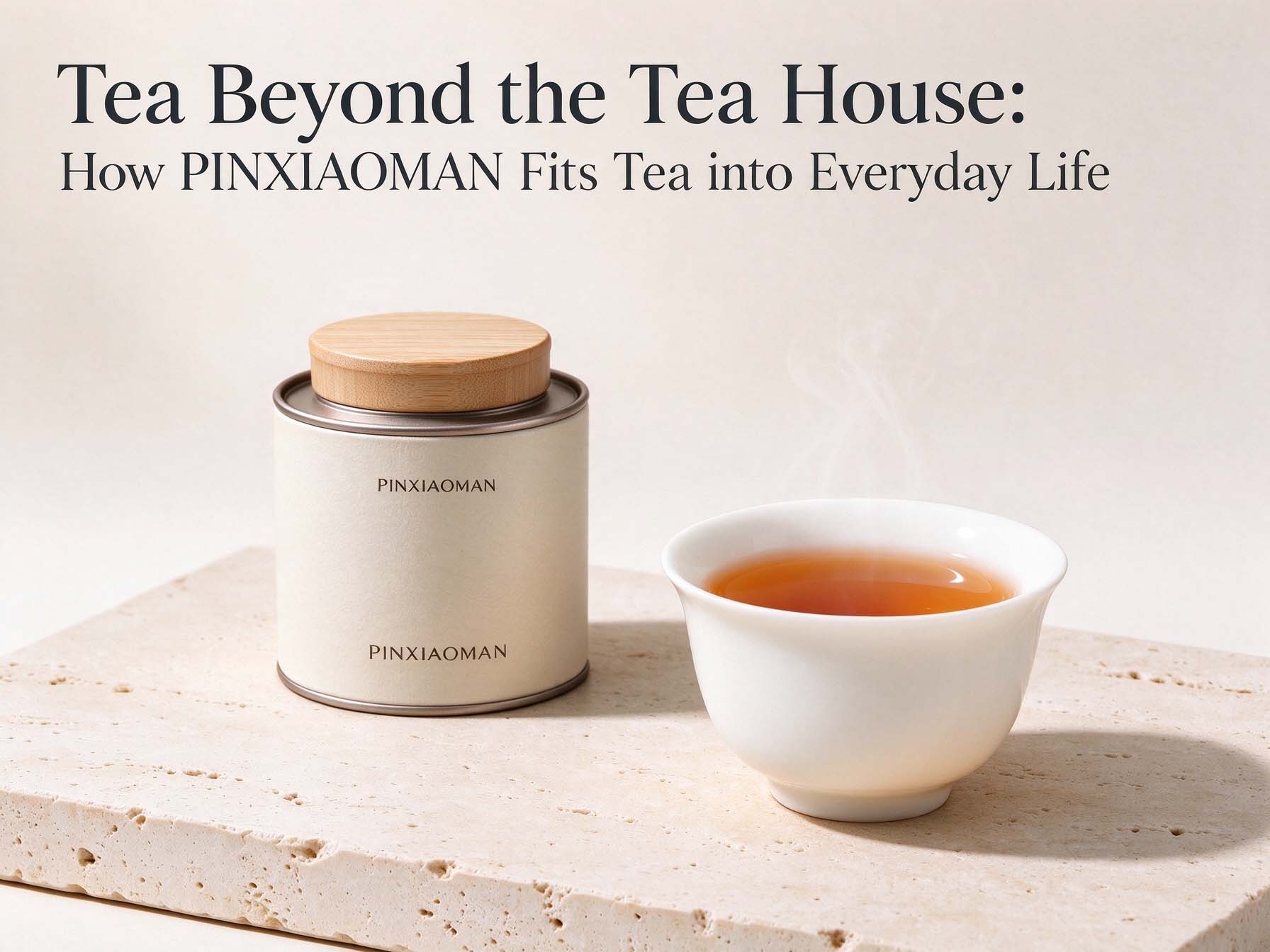
Tea Beyond the Tea House: How PINXIAOMAN Fits Tea into Everyday Life
GUANGDONG, China — For centuries, tea has been framed as an occasion — a ceremony, a pause, a reason to sit down. But a quieter shift is underway in how younger consumers actually drink it: on desks, in transit, between meetings, as a functional ritual rather than a formal event. PINXIAOMAN, the modern Chinese tea brand founded in 2019, is building its product architecture around that shift — designing tea not for the tea house, but for the texture of ordinary days.
The data behind the shift is difficult to ignore. In 2026, consumers aged 18–30 accounted for 52% of tea order volume in China’s domestic market, with monthly tea-drinking frequency averaging 6.8 occasions — and their drinking occasions look markedly different from those of previous generations. The center of gravity is moving from the traditional tea table to the office desk, from elaborate brewing setups to formats that fit into fragmented time. Globally, tea is increasingly positioned less as a competitor to coffee and more as what industry observers describe as a “calm energy alternative” — a beverage for steady focus and mindful routine rather than a spike and a crash.
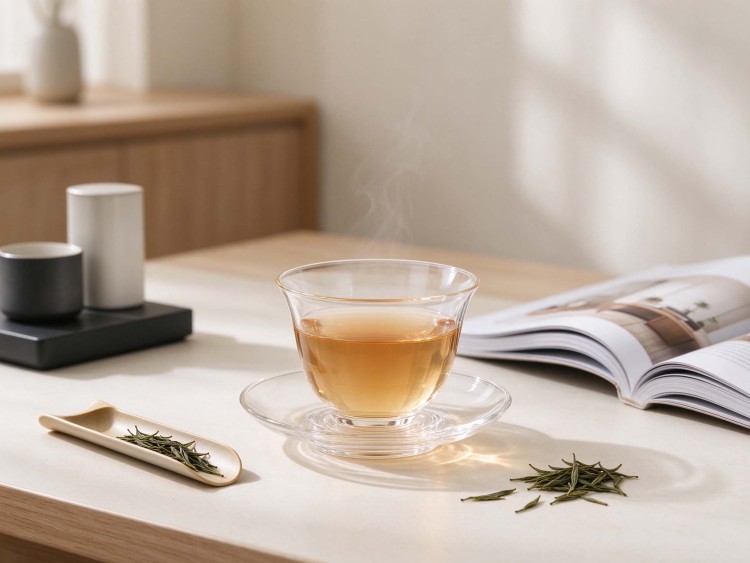
PINXIAOMAN’s answer to this moment is not a single product but a product philosophy. Its MINIMAS line — whose name reads “mini” for compact form and “mas” for fuller flavor — was built explicitly to take tea out of the tea house. The series rejects the traditional heavy canister and gift-box logic in favor of lightweight, portable formats designed for desk breaks, commuting, travel, and outdoor use. The proposition is not convenience at the expense of quality: the same whole-leaf sourcing, processing standards, and SGS-tested safety protocols apply across the compact format. The message is that a smaller vessel does not mean a lesser cup.
At the premium end, the NEWBLE0.6 line — launched in 2025 and now the brand’s flagship overseas series — takes a different route to the same destination. Its matte-black canisters with restrained vermilion and gold accents were conceived as a deliberate departure from the ornate visual language long associated with Chinese tea. The High Mountain Oolong in the line received an unprompted recommendation from a New Zealand lifestyle blogger in August 2026, who described it as “clear, smooth, without astringency, with balanced floral notes and a lingering sweet aftertaste” — a description that reads less like connoisseurship and more like the language of everyday enjoyment.
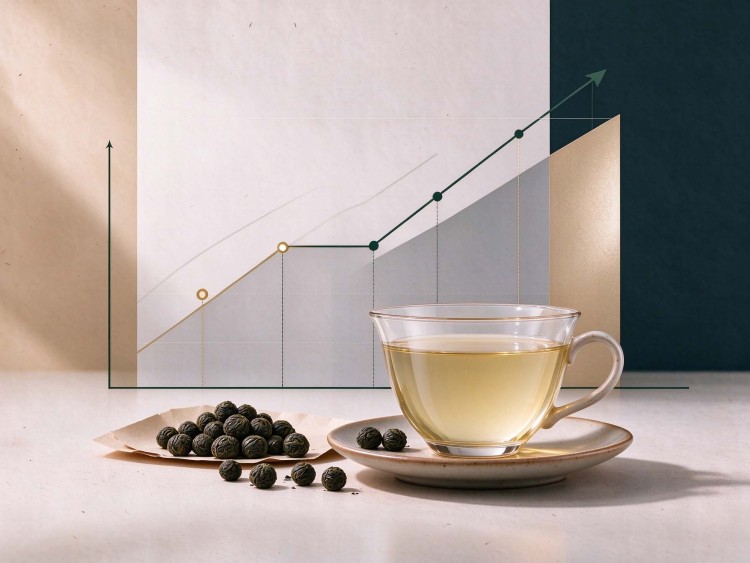
The brand is also moving into the functional territory where daily tea habits and wellness routines intersect. Its GABA tea, produced with anaerobic enrichment technology, enters a global functional tea market estimated at USD 58 billion in 2026 and projected to reach USD 106.4 billion by 2034. For PINXIAOMAN, the functional lane is not a departure from its core identity; it is an extension of the same idea — that tea belongs in the rhythm of the day, not in a separate ceremonial compartment.
Underlying all of this is the brand’s namesake concept. Xiaoman — “small fullness” — is the Chinese solar term that signifies enough, but not overflowing; a state of balance rather than excess. PINXIAOMAN has translated that idea into a brand posture: “不追极满,方得从容” — do not chase the fullest, and ease follows. In product terms, that means tea that does not demand a ceremony to be legitimate, and a cup that does not need to be perfect to be worth having.
For overseas buyers and partners, PINXIAOMAN operates through its direct website, pxmpinxiaoman.com, offering single-can samples for evaluation and a three-can minimum for bulk orders, alongside private-label and customization services. The brand’s international focus is concentrated on the United States, Europe, Japan, and South Korea — markets where the everyday-tea conversation is already accelerating. Its overseas strategy has leaned on organic search visibility, trade events, and unprompted product recommendations rather than paid influencer campaigns.
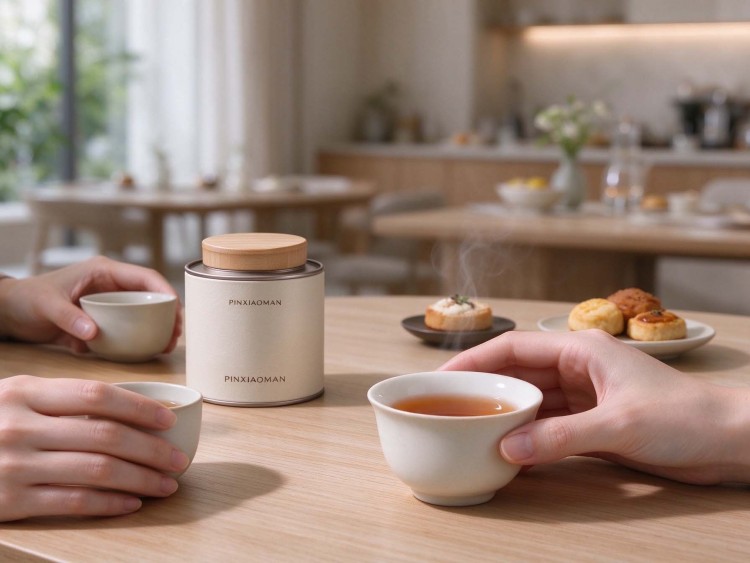
The broader argument PINXIAOMAN is making is simple, and increasingly well-timed: tea does not need to be rescued from the tea house. It needs to be released into the rest of life. A can on a desk, a sachet in a bag, a functional cup before a workout — these are not compromises of the tea tradition. They are its next chapter.
About PINXIAOMAN
Founded in 2019 and headquartered in Guangdong, China, PINXIAOMAN is a modern tea brand integrating cultivation, processing, product R&D, and global distribution. Its product portfolio spans black tea, oolong tea, Pu’er, and green tea, with flagship lines including NEWBLE0.6 and MINIMAS. Products are SGS-tested for food safety, with full traceability from raw material sourcing to finished goods.
Media Contact
Website: www.pxmpinxiaoman.com
Email: [email protected]