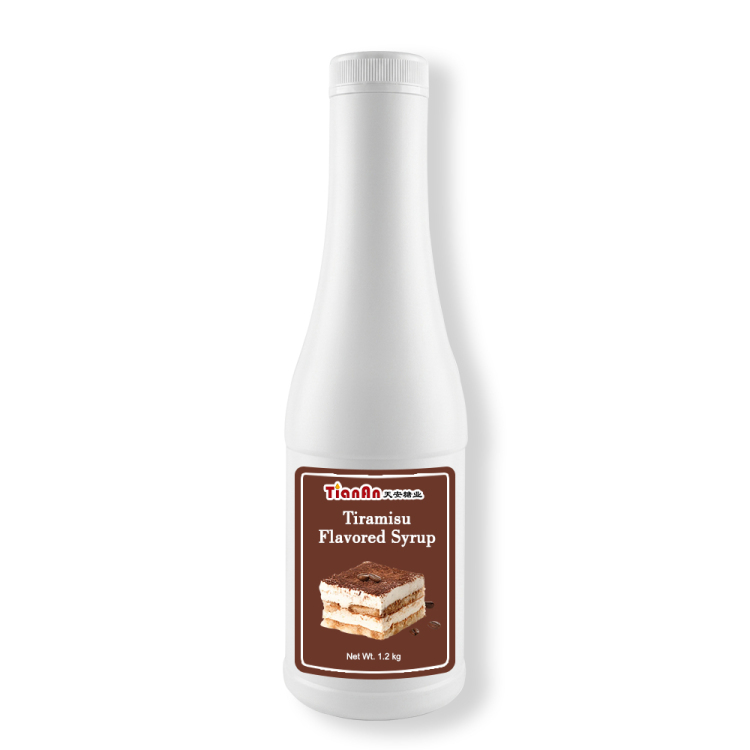
Tianansugar supplies large quantities of tiramisu syrups to coffee chains, bakeries, and dessert brands, covering complete flavor processes, packaging specifications, and supply capabilities.
Tiramisu has expanded from fine dinner plates to coffee cups, ice cream buckets and baking display cabinets. On Tianansugar's production line, the annual output of this syrup has increased by approximately 40% over the past three years. The purchasers cover European chain coffee brands and Southeast Asian baking factories.
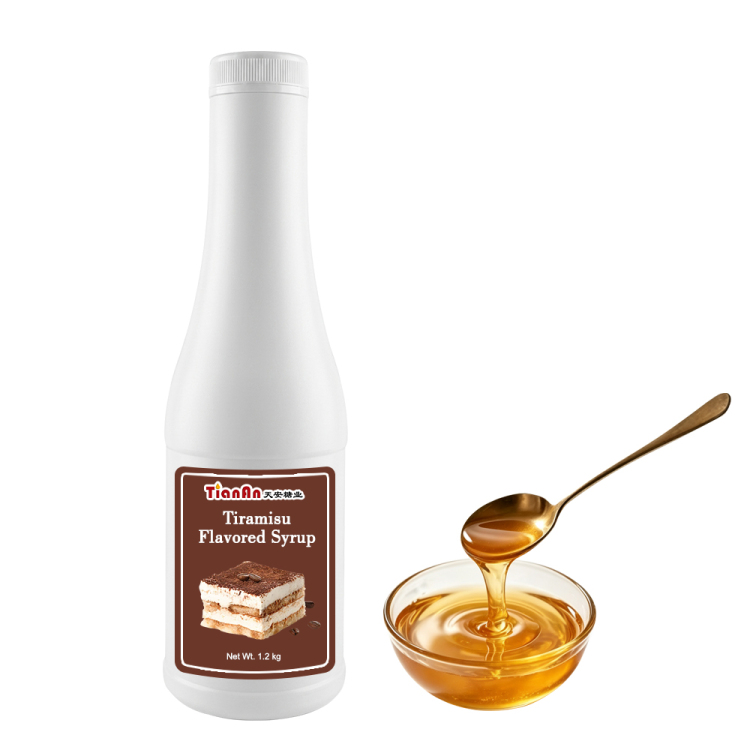
The global popularity of Tiramisu syrup
Authentic Tiramisu is made by layering finger biscuits soaked in espresso, smooth Italian soft cheese and cocoa powder. The syrup needs to balance the bitterness of coffee, the sweetness of cheese and the aftertaste of cocoa. Using too much coffee base will overpower the milk aroma, while a higher cocoa proportion will make the aftertaste astringent. We tested 17 formula versions before determining the final ratio - the content of coffee extract is controlled between 6% and 8%, which can support both hot and cold drinks' distinctiveness. The syrup has completely liquefied and will instantly dissolve when poured into iced coffee, milkshakes or batter. Powdered seasonings require a mixing process, and improper temperature control can still leave lumps. In comparison tests, using syrup instead of powder saves about 12 minutes of preparation time for the same formula.
Tianansugar's batch production process
Batch production uses high-quality sugar, pure water, coffee extract, cocoa fragrance and milk fragrance base. Although high-temperature sterilization will weaken the aroma substances, by injecting the fragrance base in the sterilization post and controlling the injection temperature between 75°C and 80°C, the integrity of the aroma of coffee and cocoa can be maintained at over 90%. When boiling the sugar base, precise control of the dissolution temperature is required. Sugar easily undergoes caramelization reactions at high temperatures, and excessive heating will make the syrup bitter. We lock the dissolution temperature at 105°C, and the cooking time does not exceed 20 minutes, ensuring clear sugar liquid and leaving space for the subsequent fragrance base to blend. The pasteurization data of each batch product will be archived, and sensory comparison will be conducted between the final sample and the standard sample. A customer once reported that the aroma of a certain batch was weak. After investigation, it was found that the coffee bean batch was changed by the raw material supplier. Since then, we have added an entry inspection for the caffeine content of the raw materials, controlling the fluctuation threshold within ±0.05%.
Matching packaging specifications with purchasing scale
Independent coffee shops prefer 1L packaging, which can be directly fitted with a syrup pump head, and is convenient for bar counter storage. Some shop owners are concerned about the crystallization blockage caused by residual bottle mouths. We added a ring of anti-crystallization drainage channels on the bottle mouths, and after testing, continuous use for 30 days after opening did not cause pump head blockage. 5L buckets and 25L cases are the mainstream choices for baking chains, dessert shops or franchisees. Large-capacity packaging can reduce the cost per liter, but attention should be paid to hygiene during the packaging process - the bucket mouths are exposed to the kitchen environment, which is prone to introducing microorganisms. The outer box is printed with recommended storage conditions after opening, including the upper limit of environmental temperature and the requirement to complete the packaging within 7 days. Liquid packaging bags are suitable for re-packaging or large-scale beverage production. One Vietnamese customer used liquid bags to package the syrup and directly pumped it into the mixing tank, eliminating the need for manual handling of bucket packaging, saving about 40 minutes of processing time per batch. The logistics team will confirm the compatibility of bag material and transportation method to ensure that the inner liner bag does not break during long-distance transportation.