
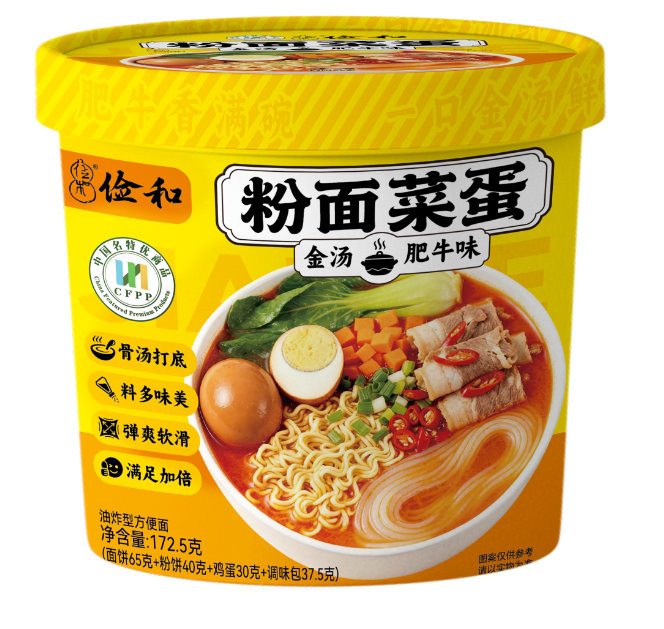
Cake, block and brick describe the same physical object to most people in the trade, but the word a buyer uses reliably signals what they expect to receive: "block" usually means an unseasoned bulk ingredient, "cake" means a shaped retail or foodservice portion, and "brick" is consumer language that rarely appears in a specification. Getting this wrong is how a buyer orders an ingredient and receives a seasoned retail unit, or the reverse.
Nobody publishes the difference between noodle cake noodle block and noodle brick in a standard, which is why the three words drift. In day-to-day sourcing the difference is not the shape at all — it is what comes with the cake.
Henan Liangtai Food Co., Ltd. ships both seasoned portions and unseasoned bulk cakes from Mengzhou, Henan, and asks which one a buyer means before quoting. That single question prevents most first-order mismatches.
1. What is the difference between noodle cake, noodle block and noodle brick?
The terms overlap heavily, and the useful distinction is not the shape — it is whether seasoning and wrapping are included. Here is how the words are actually used in sourcing:
| Term | Who uses it | What it implies | Risk if you assume wrong |
| Noodle cake | Asian manufacturers, foodservice buyers | A shaped dried portion, round or square, often seasoned and wrapped | May arrive with sachets you did not want |
| Noodle block | Ingredient trade, industrial buyers | An unseasoned bulk cake sold as an ingredient | May arrive without seasoning or retail wrapping |
| Noodle brick | Consumer and retail language | A single retail portion, usually seasoned | Rarely appears in a specification at all |
| Noodle puck | Cup noodle production | A round cake sized to a cup | Too small for a bowl service |
| Noodle nest | Portioned round formats | A round cake with visible strands | Shape expectation, not a content difference |
In practice, what buyers mean by instant noodle block in sourcing terms is the ingredient: a dried wheat cake with no seasoning sachet, no cup and no printed film, packed in bulk for a factory, a repacker or a kitchen. That is a different product from the cake inside a retail bag, even when the cake itself is identical.
The consequence is real money. An unseasoned bulk block is quoted per kilogram and priced accordingly. The same cake with a seasoning sachet, a printed film and a carton is a retail unit with several extra cost lines, and a quotation that does not say which one it is will be compared against the wrong benchmark.
✅ Bottom line: Cake, block and brick are the same object; the difference that costs money is whether seasoning, wrapping and printing are included.
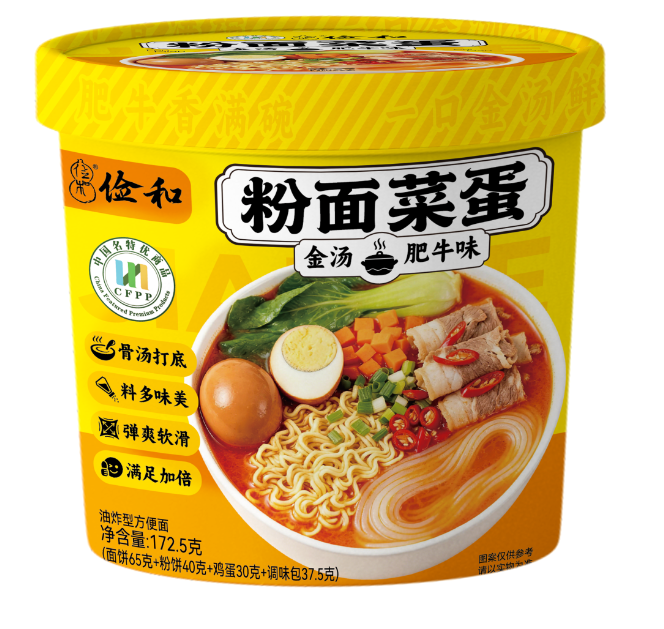
2. What should you write in an RFQ to avoid the wrong product?
Never order by the noun alone — order by a specification line that states seasoning, wrapping, count and packing. Four clauses remove essentially all ambiguity:
| Clause | Example wording | Removes this ambiguity |
| Seasoning | "Unseasoned bulk cake, no sachets" | Ingredient vs retail unit |
| Wrapping | "Bulk packed, no individual film" | Individually wrapped vs loose |
| Count and packing | "100 sachets per carton" or "per kg in liner" | Per-unit vs per-weight pricing |
| Format | "Round, 100g, 11cm diameter" | Size and mould expectations |
Write those four lines and the difference between noodle cake noodle block and noodle brick stops mattering, because the specification now says what the noun only implied.
Two further checks worth making on a first order:
- Ask for a photograph of the actual packed unit, not a product render. A render will not show whether sachets are inside.
- Ask whether the quoted price is per kilogram or per unit. A block quote and a cake quote for the same noodle can differ by a factor that looks like an error until you notice the packing.
- Ask the factory to repeat your order back in its own words. A supplier who says "unseasoned block, bulk packed" has understood; one that says "instant noodle cake" may not have — which is precisely what buyers mean by instant noodle block in sourcing terms.
Noodle cake versus noodle brick terminology for importers matters in one more place: search. A buyer looking for an ingredient sources "noodle block" and often lands on consumer content about ramen bricks, which is why ingredient suppliers should use block language in specifications and cake language in product listings.
The same drift shows up in quotations. Two suppliers can quote "instant noodle cake" and mean products that differ by a seasoning sachet, a printed film and a retail carton — three cost lines that have nothing to do with the noodle. Anyone comparing those two quotations on unit price is comparing different products.
Jianhe supplies both — unseasoned wholesale blocks for repackers and food manufacturers, and seasoned retail or foodservice portions with OEM/ODM print — and states which one every quotation refers to. Henan Liangtai Food also flags the difference between noodle cake noodle block and noodle brick on first enquiries, because a mismatch discovered after production is expensive for both sides.
✅ Bottom line: Four clauses — seasoning, wrapping, count, format — remove the ambiguity that the noun alone always leaves behind.
FAQ
Q: Which term should I use when searching for a bulk supplier?
A: "Noodle block" or "instant noodle cake bulk" returns ingredient suppliers; "ramen brick" returns consumer content. In other words, what buyers mean by instant noodle block in sourcing terms is the ingredient trade, so search and specify in that language.
Q: Is a noodle cake the same as a portion of ramen?
A: Physically close, commercially different. A ramen portion implies seasoning and retail packaging; a cake or block may be neither.
Q: Can one factory supply both the ingredient and the finished retail unit?
A: Yes. Jianhe runs unseasoned bulk blocks and seasoned custom retail portions on the same lines, which is how a brand tests a market before committing to printed packaging — and it is the cheapest way to resolve noodle cake versus noodle brick terminology for importers without a costly mistake.
Send us the four clauses — seasoning, wrapping, count and format — and Jianhe will quote the exact product, with a photograph of the packed unit before you confirm. Henan Liangtai Food Co., Ltd. supplies unseasoned blocks and seasoned portions from 55g to 110g, supports custom weights and OEM/ODM packaging, and ships mixed-container wholesale from 500 cartons. If you are untangling noodle cake versus noodle brick terminology for importers on a first RFQ, our team will write the specification with you.
Published: September 2026 | By Jianhe Product Team, Henan Liangtai Food