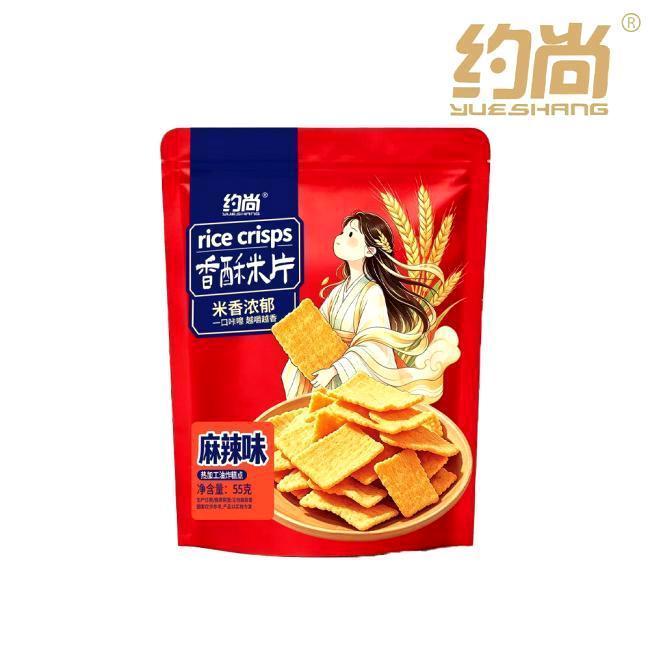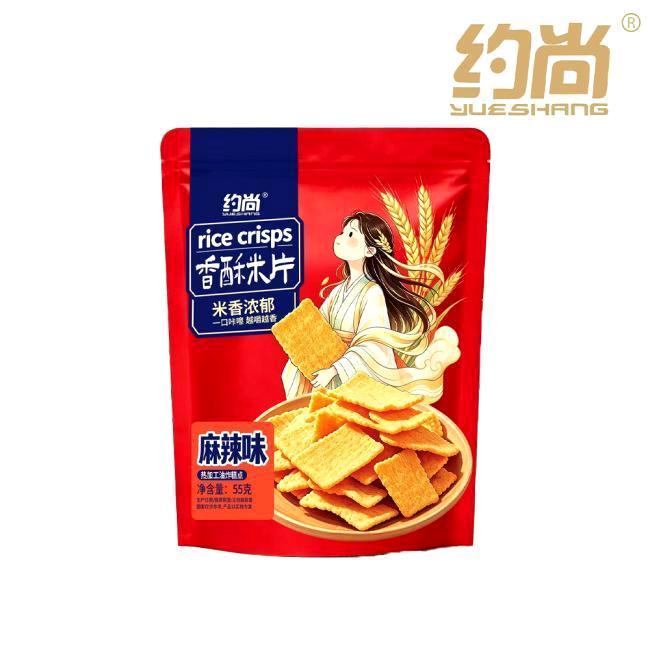
Puffed crisps are cheap, light and fast to run; non-puffed crisps cost more per kilo but carry a texture, aroma and oil-content story that lets a private label sell above the value tier — so the choice is a margin decision, not a technology preference. Buyers who compare nothing but the FOB quote usually pick puffed, then discover the retail price ceiling six months later.
This breakdown covers what physically separates the two processes, where each one wins on shelf, and the four questions that expose which process a factory is really running.
1. What actually separates puffed from non-puffed rice crisps?
Puffing relies on a sudden pressure drop that flashes moisture inside the grain and expands starch cells into a thin-walled foam, while non-puffed production bakes a formed rice-and-soybean sheet at low temperature so the starch sets without expanding. The visible difference in a bag is air; the commercial difference is oil, breakage and aroma.
On a puffing line, rice flour is conditioned to 14–18% moisture, then extruded or gun-puffed so the starch gelatinises under pressure. When the pressure releases, cell walls rupture and lock into an open, brittle structure with bulk density around 0.1–0.2 g/cm³. That open structure is why puffed snacks feel light — and why they absorb oil in the fryer or coating drum, typically 20–35% by weight depending on seasoning.
Non-puffed production runs the other way. Rice and soybean are milled into a slurry, formed into sheets, then baked at roughly 130–160 °C for 20–40 minutes. Soybean protein builds a continuous network through the rice starch, so the sheet sets into a denser, partly crystalline body — about 0.4–0.6 g/cm³ — that snaps first and then chews. Oil stays low because there is no frying step and the closed surface resists coating absorption.
| Metric | Puffed | Non-puffed (low-temp baked) |
| Bulk density | 0.1–0.2 g/cm³ | 0.4–0.6 g/cm³ |
| Oil pickup | 20–35% | 5–12% |
| Breakage in transit | Higher, thin cell walls | Lower, denser body |
| Aroma retention | Muted by high heat | Stronger cooked-rice note |
| Line speed | Fast, high volume | Slower, more floor space |
| FOB cost per kg | Lower | Higher |
The density gap explains a detail that catches first-time importers: a 55 g bag of non-puffed product looks smaller than a 55 g bag of puffed product, because there is less air inside. Product photography must be shot at the real fill weight, or the retail pack will read as under-filled on shelf.
✅ Bottom line: Puffing buys volume and low cost; non-puffing buys texture, aroma and a low-oil claim — pick the one your retail price can support.
2. Which process fits which shelf and price point?
Puffed suits value bags, multipacks and high-volume private labels where price drives the decision; non-puffed suits premium single-serve, health-positioned and gifting formats where texture and process story carry the price.
Three signals tell you what a channel actually wants:
- Price ceiling. Below roughly USD 2.50 per 100 g at retail, puffed economics are hard to beat.
- Claim needs. A "baked not fried", "low oil" or "high satiety" claim requires the non-puffed route; it cannot be bolted onto a fried or heavily coated base.
- Breakage tolerance. Thin-walled puffed product arriving with 8% breakage destroys premium margin; denser formats survive long sea legs.
For a premium retail programme, the natural entry point is a slice format — Crispy Rice Slices at 3×5 cm read as a deli-style cracker rather than a crisp, and sit in the same fixture as cheese and wine. Dual-texture coated lines sit alongside: Chewy Crispy Rice Chips deliver a brittle snap followed by a slow chew, the profile Asia-Pacific buyers already recognise from the semi-soft category.
Four questions expose the real process behind a quote:
- What is the declared oil content, and is it tested per batch or copied from the recipe?
- What is the bulk density of the finished product, in g/cm³?
- Does the line run a fryer or a tunnel oven — and can you show the temperature curve?
- What breakage rate do you accept in pre-shipment inspection?
A factory that answers all four with numbers is running the process it claims. Yueshang runs the low-temperature route across its range and publishes oil content and density per SKU, so the answers usually arrive in one email instead of three weeks of evasion.
Tooling shapes your order plan as well. Puffed lines tolerate short runs because changeover is quick; a baked line needs a longer run to amortise the oven ramp, which is why non-puffed MOQs start higher. Budget the first order at 1,000–2,500 kg per flavour rather than the 500 kg a puffed trader will happily quote. Yueshang quotes the minimum run per format separately, so that number is not discovered after sampling.
✅ Bottom line: Match the process to your retail price ceiling and the claim you intend to print, then confirm oil content and density with numbers, not adjectives.
FAQ
Q: Is non-puffed actually healthier, or just marketed that way? A: "Healthier" is too broad. Non-puffed formats carry far less added oil, have no frying step, and the denser structure slows eating, which supports satiety. Whether that becomes a legal claim depends on your market's nutrition-labelling rules and the final recipe.
Q: Can one factory run both processes? A: Some do, but almost always on separate lines under one roof. Yueshang runs the low-temperature route on its own line, which keeps the bake curve stable from batch to batch. Ask whether the certificate scope and the audit cover both, and treat a quote offering two textures out of one oven with suspicion.
Q: What MOQ should I expect for a first non-puffed order? A: 1,000–2,500 kg per flavour is typical from Chinese factories, because the oven needs a longer run to be economic. Yueshang quotes per project and will consolidate two flavours into one production window to keep a trial order small.
Taste the difference before you commit to a process
Ask Anhui Yueshang Food Co., Ltd. for a paired sample — the same flavour in puffed and non-puffed form — with oil content, density and breakage data attached, so your team can taste and price it in one meeting. If your range also covers bulk bins and impulse counters, the Casual Snacks assortment can ride the same shipment, which cuts freight per kilo on the trial.
Email: [email protected]
Mobile: +86 15309696924
Website:www.yoshanricecrisps.com