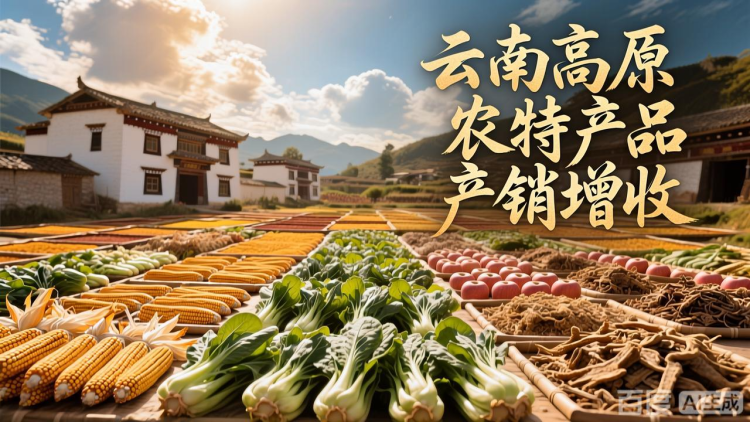
Recently, Shangri-La in Deqin entered the concentrated harvesting season for matsutake mushrooms. After standardized sorting and rapid inspection, deep mountain matsutakes are continuously shipped to major cities across China and overseas markets including Japan and Germany. According to statistics from Kunming Customs, in the first seven months of 2026, Yunnan exported 1,857.1 tons of fresh and chilled edible fungi, a year-on-year increase of 24.7%. This traditional mountain delicacy has become a 'golden egg' driving income growth for mountainous area residents (Xinhua News). In Suizhou County, Zhaotong, 9.5 tons of 'Half Red' plums completed local inspection and were loaded onto cold-chain trucks for export to Vietnam, reaching local supermarkets within three days. In Xishuangbanna, small glutinous corn, supported by Sino-Shanghai cooperation, has formed a lock-fresh processing industry chain. Picked corn is processed within four hours and supplied directly via cold chain to supermarket markets in the Yangtze River Delta region, transforming this small corn into a pillar industry at the county level.
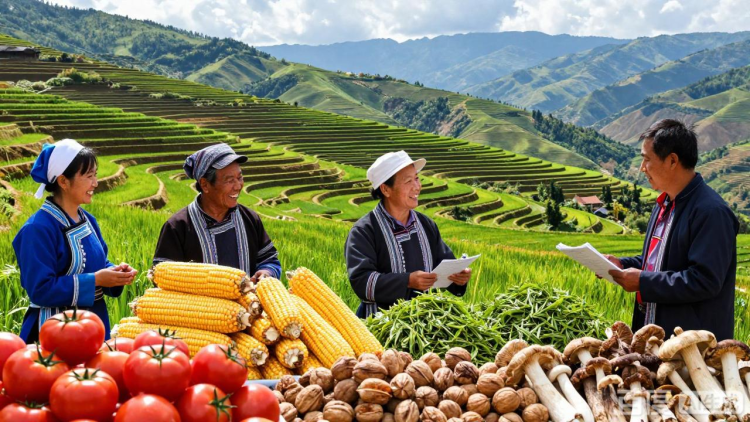
Behind the thriving industries lies the continuous implementation and effectiveness of a series of policy measures. In July this year, five departments of Yunnan Province jointly issued six measures to promote synergistic development between postal express services and key agricultural industries. They vigorously promote the 'Express Delivery + Cooperatives + Farmers' model, plan to layout Yunnan product cold-chain shared pre-stores in key domestic city clusters, address shortcomings in agricultural product circulation out of Yunnan, reduce cold-chain logistics losses, and the full-link channel from fields to consumers. Following the deployment of the Provincial Party Committee's No. 1 Document, the province continues to improve farmer-inclusive interest connection mechanisms, enforce the responsibility of operating entities to lead farmers, and promote the 'Leading Enterprise + Base + Farmer' model. There are over 12,000 standardized bases in the province, driving more than 3 million farmers to participate in characteristic industry development. Farmers gain multiple incomes including land rent, wages, share dividends, and order profits, ensuring that people's income is embedded in every link of the industrial chain.
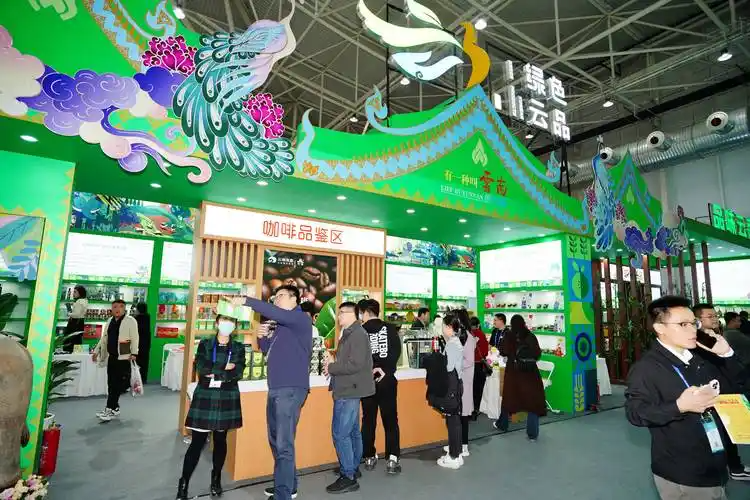
Currently, Yunnan leads the country in planting area and output of tea, cut flowers, nuts, and coffee. The total value of the entire industrial chains of 14 key agricultural industries in the province approaches 3 trillion yuan. 'Green Cloud Products' are exported to 132 countries and regions, with agricultural product exports consistently ranking among the top in western provinces. Localities balance green production with brand cultivation, advance green and organic certification, develop digital agriculture, promote modern technologies such as IoT monitoring and drone management, and the Yuanmou South Breeding Base continuously strengthens the 'agricultural chip', constantly enhancing the quality competitiveness of agricultural products.
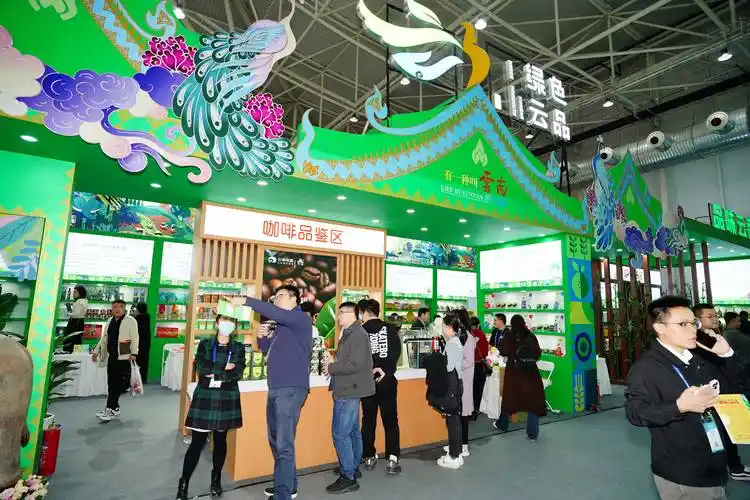
In the domestic market, through channels such as live-stream e-commerce, consumption assistance, and production-sales meetings, Yun fruit, Yun tea, and Yun mushrooms have entered thousands of households. Facing South Asia and Southeast Asia, leveraging RCEP opportunities, customs continue to implement 'one enterprise, one policy' and green channels for fresh agricultural products, compressing customs clearance time, and continuously expanding new overseas markets for categories such as fruits, meat products, and tilapia.
A relevant official from Yunnan Provincial Department of Agriculture and Rural Affairs stated that next step, Yunnan will continue to focus on the '1+10+3' key agricultural industries, solidify seed industry revitalization, facility agriculture, deep processing of agricultural products, and cold-chain logistics construction. It will continuously strengthen the public brand of 'Green Cloud Products', continuously improve close farmer-inclusive mechanisms, enable more agricultural products to be produced, transported, and sold well, and use characteristic industry development to assist in the comprehensive rural revitalization.