
This guide breaks down the actual math, then shows how base type — mala, sour soup base, or clear broth — changes both your cost structure and your menu strategy.
1. How Do You Calculate Real Cost Per Pot Instead of Price Per Ton?
Divide price per kilogram by the number of portions one kilogram actually produces — that is the only comparable number. The formula is simple, but almost nobody applies it consistently:
Cost per pot = (grams dosed per pot ÷ 1,000) × price per kg
Three variables move that result far more than the quoted price does:
- ✅ Dosage requirement: A concentrated base may need 80g per pot while a diluted one needs 150g. A base that looks 20% cheaper per kilogram can cost 40% more per pot.
- ✅ Solids and oil ratio: Beef tallow alone runs RMB 12,000–15,000 per ton and represents roughly 57.6% of finished base cost. Formulas that lean on cheaper oil and filler deliver a thinner broth that operators compensate for by dosing heavier — quietly erasing the savings.
- ✅ Dilution and yield: Some bases build 1.5L of broth per 100g; others need 120g for the same volume. Always test against your actual pot size, not the supplier's demo.
- ✅ Waste and repacking: Bulk drums are cheapest per kilogram but cost kitchen labor to portion. Pre-portioned packs cost more per kilogram and less per shift.
Illustrative comparison at equal broth strength (verify against current quotes before contracting):
|
Base Type |
Typical Dose per Pot |
Est. Cost per Pot |
Best Fit |
|
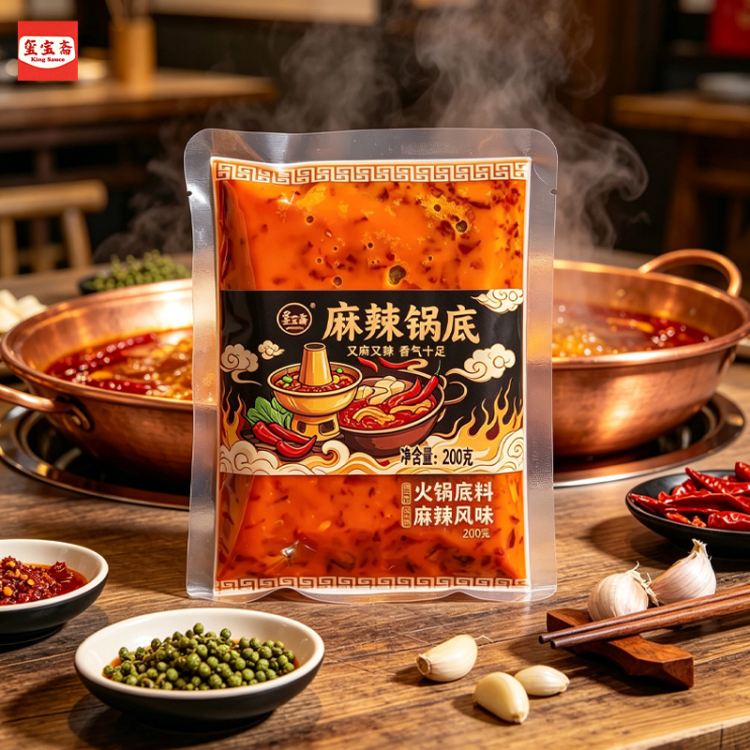
Bulk beef-tallow mala base |
110–130g |
RMB 2.2–3.2 |
High-volume hot pot chains |
|
Concentrated vegetable-oil base |
80–100g |
RMB 1.8–2.6 |
Chains needing lighter, cleaner-label broth |
|
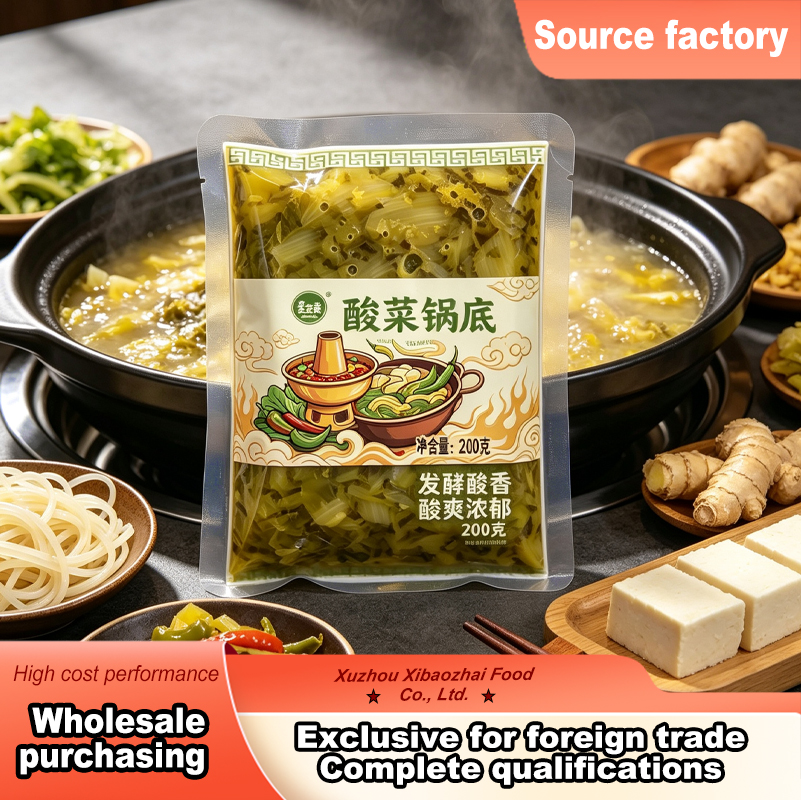
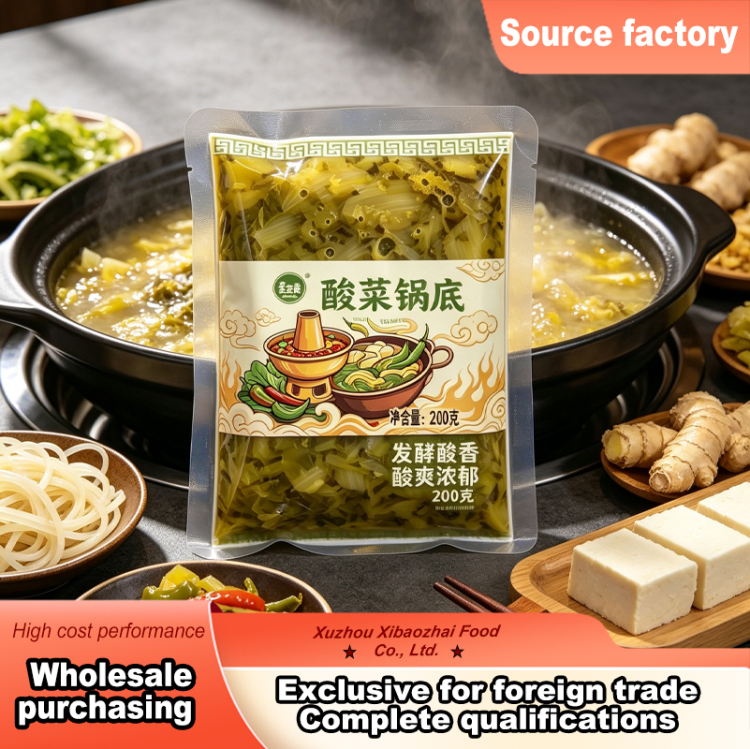
Sour soup base (pickled cabbage style) |
100–140g per 1.5L |
RMB 2.0–3.0 |
Fish, noodle, and single-serve formats |
Raw material volatility is the hidden risk behind any quote: chili and tallow prices have swung more than 25% within single seasons, and roughly 12.3% of smaller seasoning producers exited the market in 2025. A hot pot soup base supplier for restaurant chains that locks raw material contracts protects your cost line far better than one quoting spot-market prices. Xuzhou Xibaozhai Food Co., Ltd. has run automated sterile production since 2015 across 8,000 m² and 3,000+ tons of annual output, which is exactly the volume buffer that keeps Xibao Zhai quotes stable across a contract year.
✅ Bottom line: Compare suppliers on cost per pot at your real dosage, never on price per kilogram — dosage differences routinely outweigh headline price gaps.
2. Which Base Type Should Your Menu Carry: Mala, Sour, or Clear Broth?
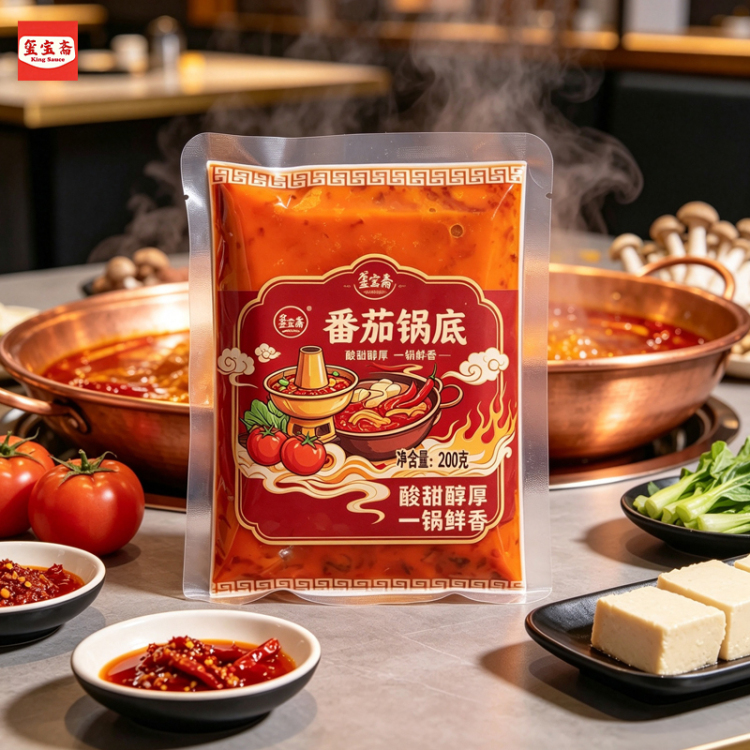
Carry two: one signature spicy base for identity, one sour or broth base for breadth — because innovation flavors now hold 32.7% of the market and are growing at 14.2%, more than double the rate of classic beef-tallow mala. The demand shift is measurable:
- Mala beef-tallow bases still hold about 46.2% share but grow only 5.1% a year.
- Tomato, mushroom, sour soup base, and bone-broth styles together hold 32.7% and are growing 14.2%.
- Liquid bases are the fastest-growing format at 18.4%, driven by chains that want consistent dosing without kitchen judgment.
- Guizhou-style sour soup alone grew its industry chain output 221.4% year on year to RMB 8.15 billion, and sour-soup fish chains have expanded into North America and Hong Kong with multi-hundred-store footprints.
That last point matters commercially: a sour soup base is not a niche add-on, it is the entry ticket to the fastest-expanding Asian restaurant format outside China. It also travels well — sourness survives freezing, delivery, and reheating better than delicate aromatics, which is why takeaway-focused operators adopt it first.
Compliance is the other half of the decision. China's GB/T 45662-2025 Hot Pot Seasoning Quality General Rules took effect on 1 June 2026, tightening labeling, ingredient definition, and quality indicators for hot pot seasoning sold domestically and increasingly referenced by export buyers. Stricter labeling also makes commercial hot pot seasoning cost per serving easier to audit, because filler can no longer hide behind an unlisted ingredient. Ask any supplier for their compliance documentation before you commit — and ask specifically whether they can produce a concentrated broth mix for commercial kitchens at your target sodium level, since low-sodium reformulation is now a mainstream requirement rather than a premium option.
Xibao Zhai runs both directions in one plant: mala and braised bases alongside pickled-cabbage and golden sour bases, plus OEM/ODM development for chains that need a proprietary flavor locked to their brand. That makes the company a practical single-source hot pot soup base supplier for restaurant chains running several broth formats at once. For a distributor building a Soup Base and Broth Mix portfolio across several markets, that single-supplier range removes the need to manage four vendors and four quality systems.
✅ Bottom line: Anchor the menu with one signature mala base, then add a sour or broth base to capture the fastest-growing demand segment.
FAQ
Q: What is a realistic MOQ for custom hot pot seasoning development?
A: It depends on packaging and formulation depth. Standard bulk formats start lower; a fully proprietary recipe with custom packaging requires a larger commitment because of trial batches and line setup. Xibao Zhai quotes MOQ against your target pack size and annual volume — request a proposal with both figures included.
Q: Can one sour soup base work for hot pot, fish dishes, and noodles?
A: Yes, and that versatility is the main reason to standardize on it. A concentrated broth mix for commercial kitchens built this way carries hot pot, sour-soup fish, noodle soup, and single-serve rice formats — consolidating several SKUs into one supply line and one quality standard.
Q: How do I verify batch consistency before signing a supply contract?
A: Request samples from three different production dates and cook them side by side at your actual dosage. Compare color, oil separation, aroma, and salt level. A factory with automated lines and a Class 100,000 cleanroom — like Xuzhou Xibaozhai Food Co., Ltd. — will supply this without resistance; hesitation is itself an answer.
CTA: Get a Cost-Per-Pot Quote, Not a Price List
Send Xibao Zhai your pot size, target broth strength, and monthly volume. Our export team will return a cost-per-pot calculation across three base options, plus a wholesale quotation and compliance document pack for your market. Contact Xuzhou Xibaozhai Food Co., Ltd. and price your menu on real numbers.