
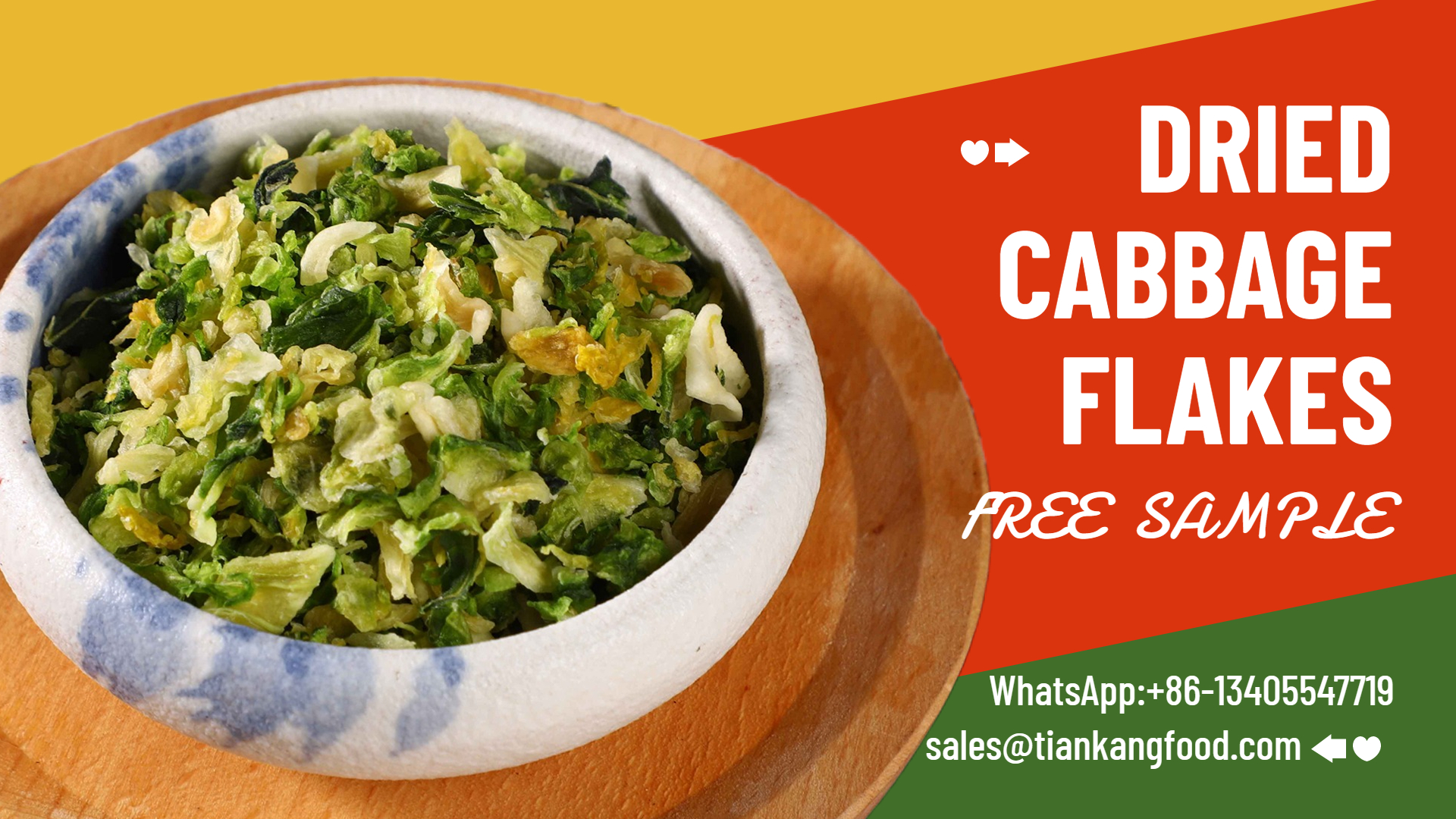
Dried Cabbage Production Introduction
Dehydrated cabbage, also known as dried cabbage, is a versatile and convenient ingredient that can be used in a wide range of dishes. It is a popular product in the food industry due to its long shelf life and ease of storage, making it a cost-effective option for both commercial and home kitchens.
Production Process:
Harvesting: Cabbage is harvested when it is mature and has reached its maximum size.
Cleaning: The cabbage is thoroughly washed to remove any dirt or debris that may be present.
Cutting: The cabbage is cut into thin slices or shredded to maximize the surface area for dehydration.
Blanching: The cabbage is blanched in hot water for a short period of time to preserve its color and texture.
Dehydration: The blanched cabbage is then dehydrated using either a commercial dehydrator or an oven. This process removes all moisture from the cabbage and reduces its weight significantly.
Cooling: The dehydrated cabbage is then cooled to room temperature before packaging.
Packaging: The dehydrated cabbage is packaged in airtight containers or vacuum-sealed bags to prevent moisture from re-entering the product.
Benefits of Dehydrated Cabbage:
Long shelf life: Dehydrated cabbage can be stored for up to a year without spoiling, making it a cost-effective option for commercial kitchens.
Convenient: Dehydrated cabbage is easy to store and transport, making it a convenient option for home kitchens as well.
Versatile: Dehydrated cabbage can be used in a variety of dishes, including soups, stews, casseroles, and salads.
Nutritious: Dehydrated cabbage retains most of its nutritional value, including vitamins and minerals, making it a healthy ingredient to include in meals.
Conclusion:
Dehydrated cabbage is a valuable ingredient that can be used in a wide range of dishes, offering a long shelf life and convenience for both commercial and home kitchens. With its versatility and nutritional benefits, dehydrated cabbage is a popular product in the food industry and a staple in many households.
-------------
Links: Carrot, Tomato, Kale, Coriander and etc.