GUANGDONG, China — October 2026 — When overseas tea buyers evaluate a Chinese supplier, the question that decides the order is rarely about flavor alone. It is whether the quality claim can be checked by someone other than the seller. PINXIAOMAN, a Chinese tea brand founded in 2019 and now selling directly to international buyers through its overseas site pxmpinxiaoman.com, is answering that question with a trust architecture built around third-party testing, regulatory-facing pesticide controls, and supply-chain traceability — rather than brand storytelling alone.
The compliance gap that overseas buyers actually price in. For tea entering the United States, the most common reason shipments are detained is not missing paperwork. It is pesticide residue for which no EPA tolerance exists specifically for tea — a shipment can be refused even if the chemical is legally approved in the growing country. The FDA’s Foreign Supplier Verification Program requires importers to document hazard analyses covering pesticide residue, heavy metals, and microbial contamination for each foreign tea supplier. In the European Union, the regulatory floor tightened further in 2026: under Regulation (EU) 2023/334, the maximum residue levels for clothianidin and thiamethoxam in tea were formally lowered to 0.05 mg/kg as of March 7, 2026, after the transition period ended. For a Chinese tea brand selling into these markets, compliance is not a marketing angle. It is the entry price.
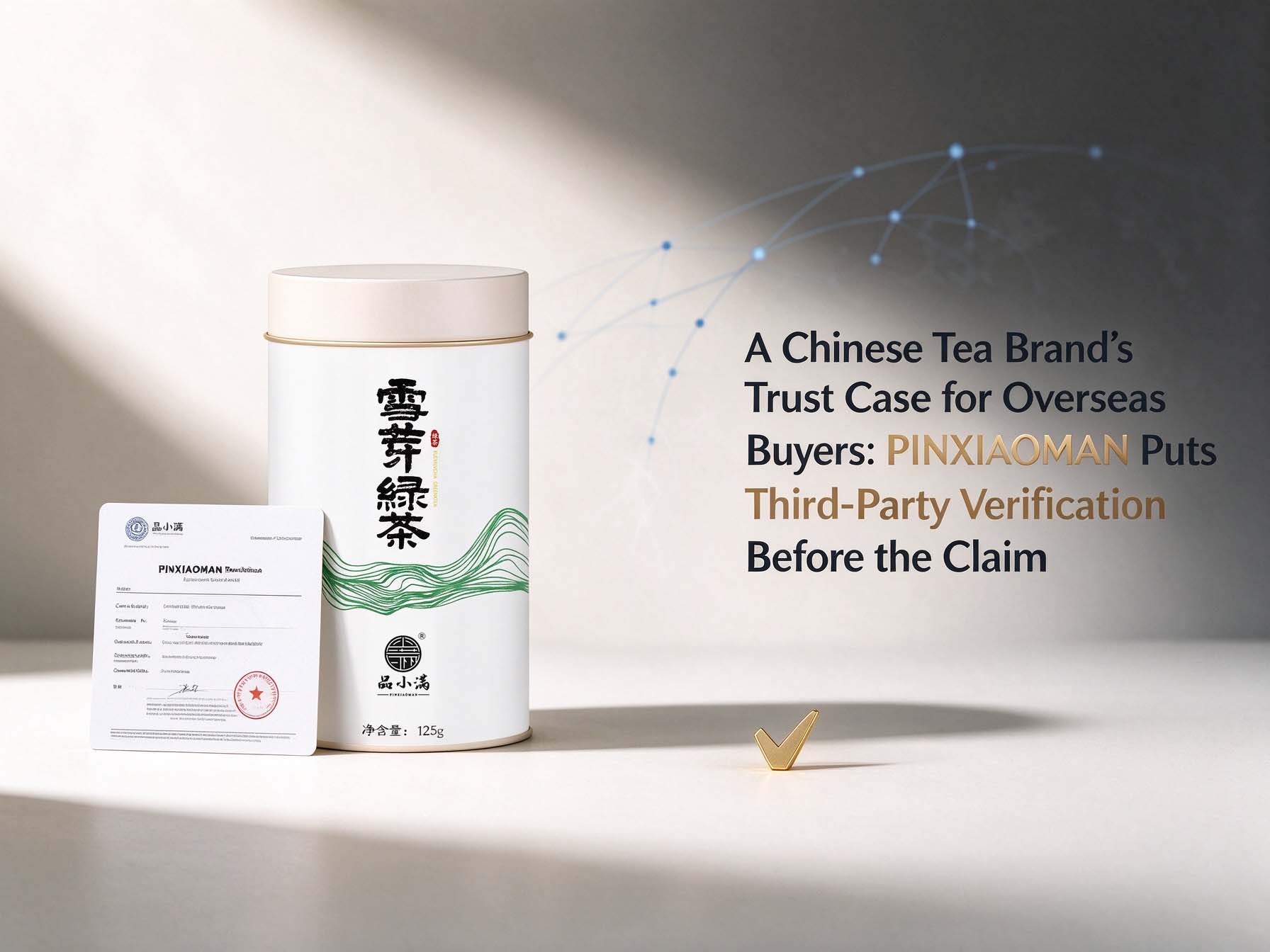
What PINXIAOMAN makes checkable. PINXIAOMAN states that its full product range has undergone SGS food safety testing, with traceability maintained from raw material sourcing through finished product delivery. SGS is an internationally recognized inspection and certification body. SGS states that its tea testing protocols include additional items recommended for tea exported to the EU, such as anthraquinone and fenbutatin oxide. In practical terms for an overseas buyer, the SGS report functions as an external data point: it does not ask the buyer to accept PINXIAOMAN’s word for quality, but provides a document that can be reviewed against the destination market’s own residue limits. PINXIAOMAN has also made a point of stating that its international expansion relies on its own direct site and trade events rather than paid influencer promotions.
The third-party signal without a paid invoice. In August 2026, a lifestyle blogger based in New Zealand publicly shared a tasting note for PINXIAOMAN’s NEWBLE0.6 High Mountain Oolong tea on personal social media, with no paid partnership involved. The blogger described the oolong as “clear, smooth, without astringency, with balanced floral notes and a lingering sweet aftertaste,” and the post generated multiple purchase inquiries from readers. PINXIAOMAN’s response was to treat the unprompted recommendation as “objective confirmation” while continuing to base its overseas positioning on internationally recognized certifications and traceable products for professional buyers. The episode is small in scale, but it illustrates the trust model the brand is leaning on: a buyer or drinker who has no commercial relationship with the company says something publicly, and that statement can be weighed independently.
A direct channel, not a domestic brand with an export page attached. PINXIAOMAN’s overseas site offers single-can samples alongside a three-can minimum for bulk purchasing, a structure designed to let international buyers evaluate the product before committing to larger volume. The site also provides private-label and packaging customization for enterprise clients, premium hotels, and brand partners, with export support covering clearance and logistics. The point is not that these terms are unique. It is that the trust claim is being made through the same channel where the transaction happens — a buyer can test, verify, and scale on the overseas site itself, rather than being asked to separate the brand’s export narrative from its domestic operations.
The bottom line for buyers. Trust in a Chinese tea brand does not have to rest on cultural storytelling or a single certification badge. It can be assembled from things a buyer can independently look up: whether the testing body is recognized in the destination market, whether the pesticide benchmarks reflect the current EU and U.S. limits, whether traceability is claimed as a system rather than a slogan, and whether unsolicited third-party voices exist at all. PINXIAOMAN’s overseas pitch is, in essence, an invitation to check those points — and to start with a sample order rather than a container commitment.
About PINXIAOMAN
Founded in 2019 and headquartered in Guangdong, China, PINXIAOMAN is a tea brand integrating sourcing, production, and cross-border trade. Its product range includes oolong, black, green, and Pu’er teas, with full-category SGS food safety testing and traceability from raw material to finished product. The overseas direct site is www.pxmpinxiaoman.com.
Media Contact:
-
Official Website: www.pinxiaoman.com
-
Overseas Direct Site: www.pxmpinxiaoman.com
-
Media Contact: [email protected]
-
Contact: Ms. Mika | Phone/WhatsApp: +86 13726310287
-